





This Template at a Glance
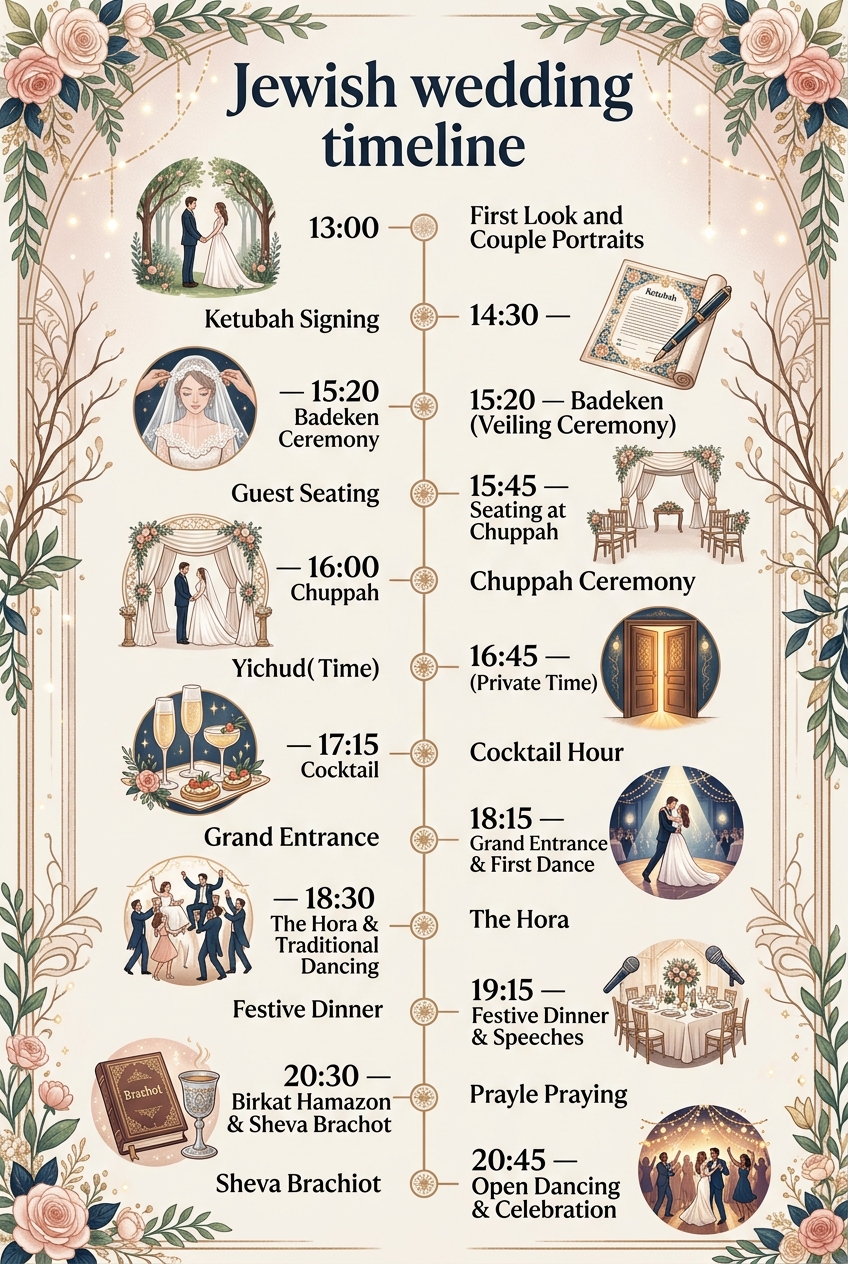
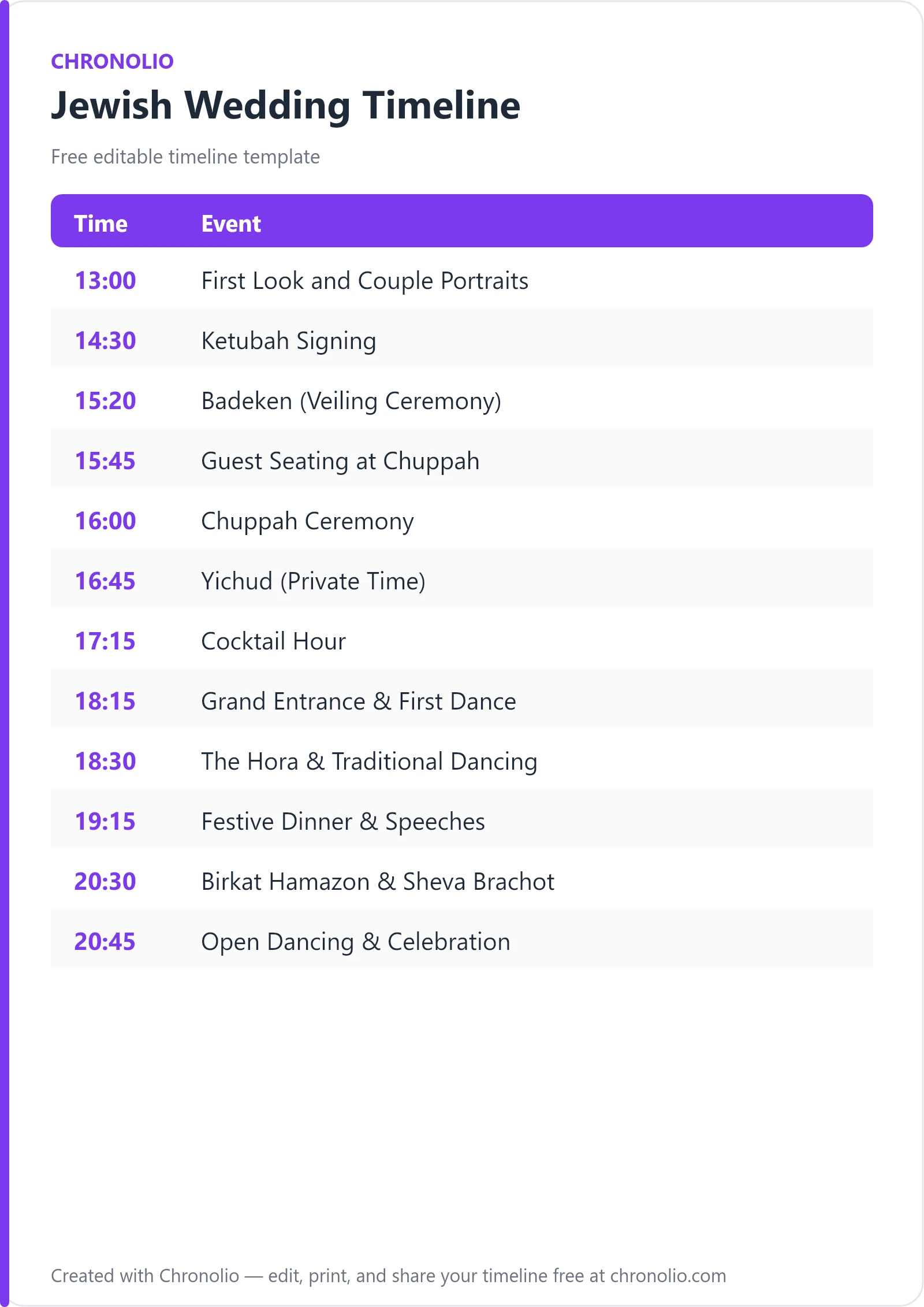
Here is the complete schedule this free template gives you — every time block, ready to edit, download, and share:
| Time | Event |
|---|---|
| 13:00 | First Look and Couple Portraits |
| 14:30 | Ketubah Signing |
| 15:20 | Badeken (Veiling Ceremony) |
| 15:45 | Guest Seating at Chuppah |
| 16:00 | Chuppah Ceremony |
| 16:45 | Yichud (Private Time) |
| 17:15 | Cocktail Hour |
| 18:15 | Grand Entrance & First Dance |
| 18:30 | The Hora & Traditional Dancing |
| 19:15 | Festive Dinner & Speeches |
| 20:30 | Birkat Hamazon & Sheva Brachot |
| 20:45 | Open Dancing & Celebration |
What Is a Jewish Wedding Timeline?
A Jewish wedding timeline is a structured master schedule that coordinates sacred traditional rituals, rabbinical requirements, vendor arrivals, and reception events across your wedding day. Unlike standard event itineraries, a traditional Jewish wedding day incorporates several key pre-ceremony customs—such as the legal signing of the ketubah and the emotional badeken veiling—before the couple ever steps under the chuppah.
Having managed logistics for dozens of traditional and modern celebrations, I can tell you that timing is everything when balancing spiritual gravity with high-energy festivities. This schedule incorporates real-world vendor buffers and rabbinical expectations, giving you a proven blueprint that prevents pre-ceremony rush while keeping your guests fully engaged from the first blessing to the final dance.
Customize Your Jewish Wedding Timeline
Why Jewish Weddings Need a Timeline
Jewish weddings are distinct because the ceremony effectively begins long before the walk down the aisle. Managing multiple distinct phases—from private contract signings to public circle dancing—requires an exact sequence so that vendors and clergy work in perfect synchronization. Without a clear schedule, critical moments like the veiling ceremony or photo sessions can easily spill over, causing delayed catering services or rushed religious rites.
Furthermore, traditional Jewish customs carry profound emotional and spiritual weight. Couples often fast throughout the morning, making it vital to keep events moving punctually toward the yichud seclusion period where the newlyweds break their fast. A well-planned schedule reduces stress for the couple and immediate families, ensuring that every tradition receives the time and solemnity it deserves.
Finally, high-energy traditions like the Hora require coordinated venue management. Venue staff need precise times to clear floor space, set up band equipment, and transition from cocktail spaces to the main ballroom. Providing a shared master document keeps your band leader, photographer, caterer, and rabbi operating from the exact same playbook.
What to Include in a Jewish Wedding Timeline
To ensure your big day runs seamlessly, your master schedule should clearly outline every core spiritual ritual and reception landmark:
- Pre-Ceremony Photography: First look photos, family portraits, and bridal party pictures taken prior to ritual gatherings.
- Ketubah Signing: Private legal and religious contract execution with the rabbi, couple, and official witnesses.
- Badeken (Veiling Ceremony): The groom checking his bride's identity and placing her veil accompanied by singing and parental blessings.
- Chuppah Ceremony: The public service including processional, ring exchange, Sheva Brachot (Seven Blessings), and breaking of the glass.
- Yichud (Private Seclusion): A mandatory 15-to-20-minute private window for the newlyweds immediately following the ceremony.
- Cocktail Hour: Kosher appetizers and drinks served to guests while the couple finishes photos or rests.
- Grand Entrance & Hora: Welcoming the couple into the ballroom followed by traditional chair lifting and circle dancing.
- Festive Meal & Speeches: Multi-course dinner service paired with toasts from loved ones.
- Birkat Hamazon: Traditional grace after meals recited over wine to close out the formal dinner phase.
- Open Dancing: Live music and contemporary dancing to celebrate late into the night.
Pre-Ceremony Traditions & Photography
| Time | Event |
|---|---|
| 13:00 | First Look and Couple Portraits |
| 14:30 | Ketubah Signing |
| 15:20 | Badeken (Veiling Ceremony) |
Starting at 13:00 on the Grand Garden Lawn allows the couple to share an intimate first look before formal photography begins. Capturing full bridal party and immediate family photos early keeps the rest of the schedule relaxed. If you are comparing different ceremony structures, you can check out our Civil Ceremony Wedding Timeline: Schedule & Agenda to see how non-denominational schedules organize pre-ceremony photos.
At 14:30, the couple and immediate family retire to the Bridal Suite for the signing of the sacred ketubah contract. Under the guidance of the rabbi, two observant witnesses sign this marriage covenant. Immediately following in the Reception Foyer at 15:20, the groom enters surrounded by dancing family for the badeken veiling ceremony to confirm his bride's identity, mirroring the biblical story of Jacob and Leah before placing her veil.
The Chuppah Ceremony & Yichud
| Time | Event |
|---|---|
| 15:45 | Guest Seating at Chuppah |
| 16:00 | Chuppah Ceremony |
| 16:45 | Yichud (Private Time) |
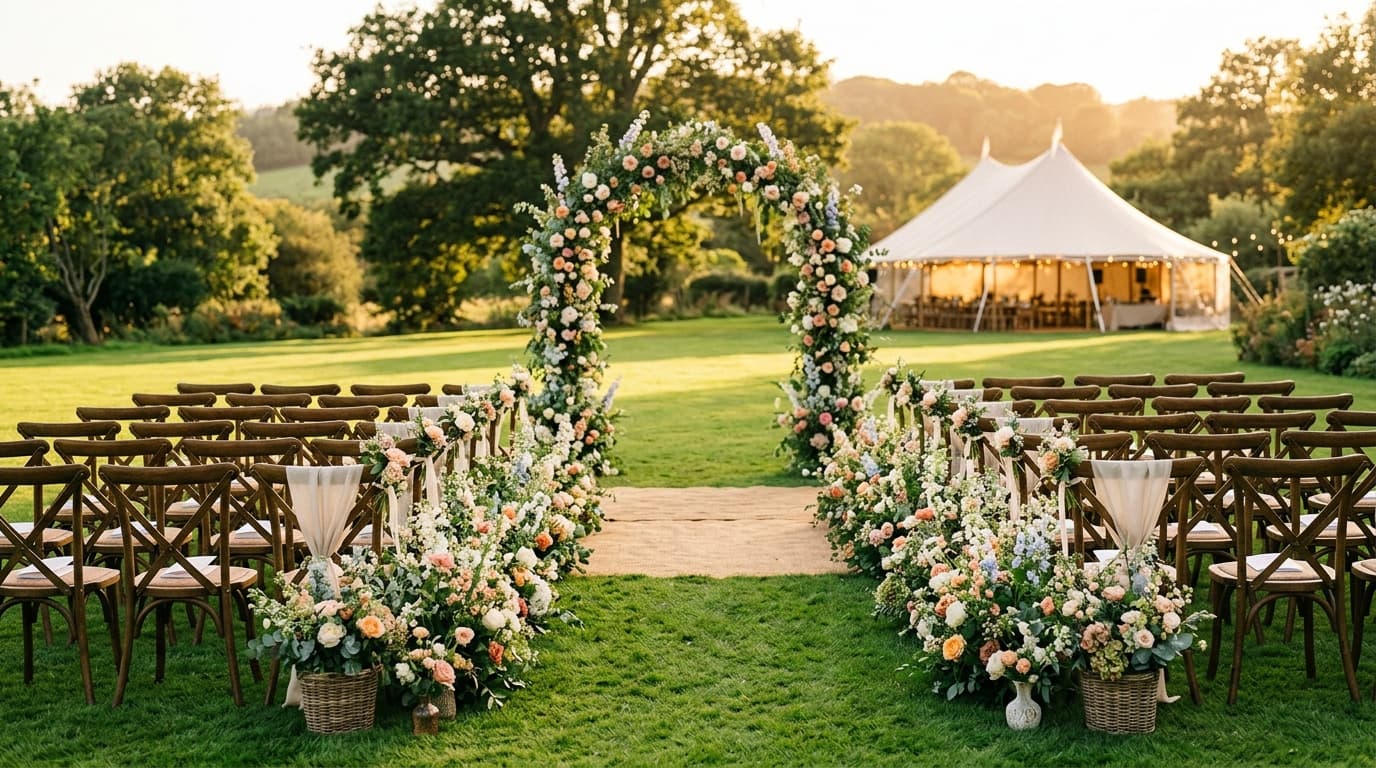
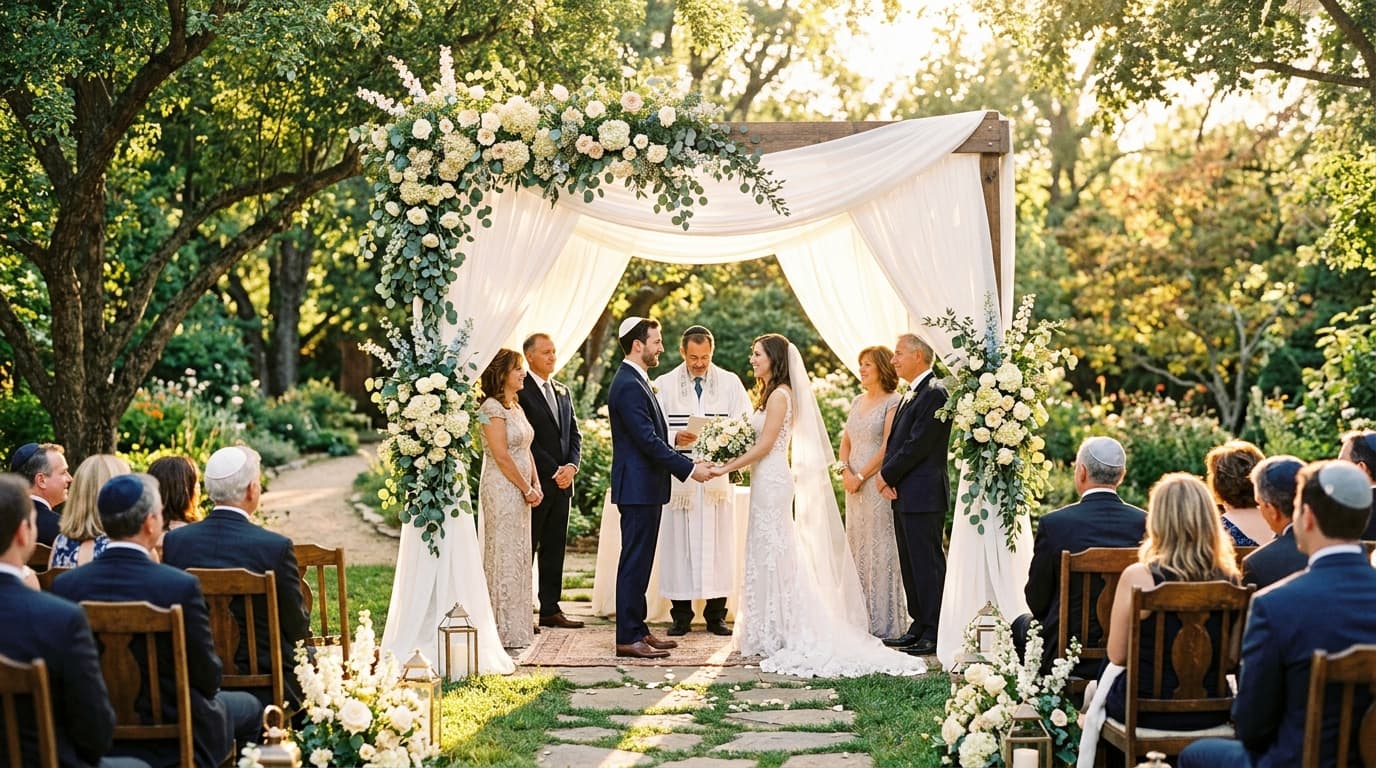
At 15:45, guests gather in the Outdoor Courtyard while musicians set a contemplative mood. At 16:00, the sacred chuppah ceremony officially begins, representing the home the couple will build together. The service features the couple circling under the canopy, the ring exchange, reading of the legal contract, and chanting of the Seven Blessings. It culminates with the groom breaking a glass wrapped in cloth, prompting a joyful cry of "Mazel Tov!" from the crowd. For broader religious schedule comparisons, explore our Church Wedding Ceremony Timeline.
Following the ceremony at 16:45, the couple retreats directly to the Private Yichud Suite. This ** mandatory 15-to-30-minute yichud seclusion period** gives the newlyweds their very first moments alone as husband and wife. Because many couples fast on their wedding day until after the chuppah, catering staff prepare a private plate of warm appetizers and wine in this room so the couple can comfortably break their fast in peace.
Evening Reception & Celebrations
| Time | Event |
|---|---|
| 17:15 | Cocktail Hour |
| 18:15 | Grand Entrance & First Dance |
| 18:30 | The Hora & Traditional Dancing |
| 19:15 | Festive Dinner & Speeches |
| 20:30 | Birkat Hamazon & Sheva Brachot |
| 20:45 | Open Dancing & Celebration |
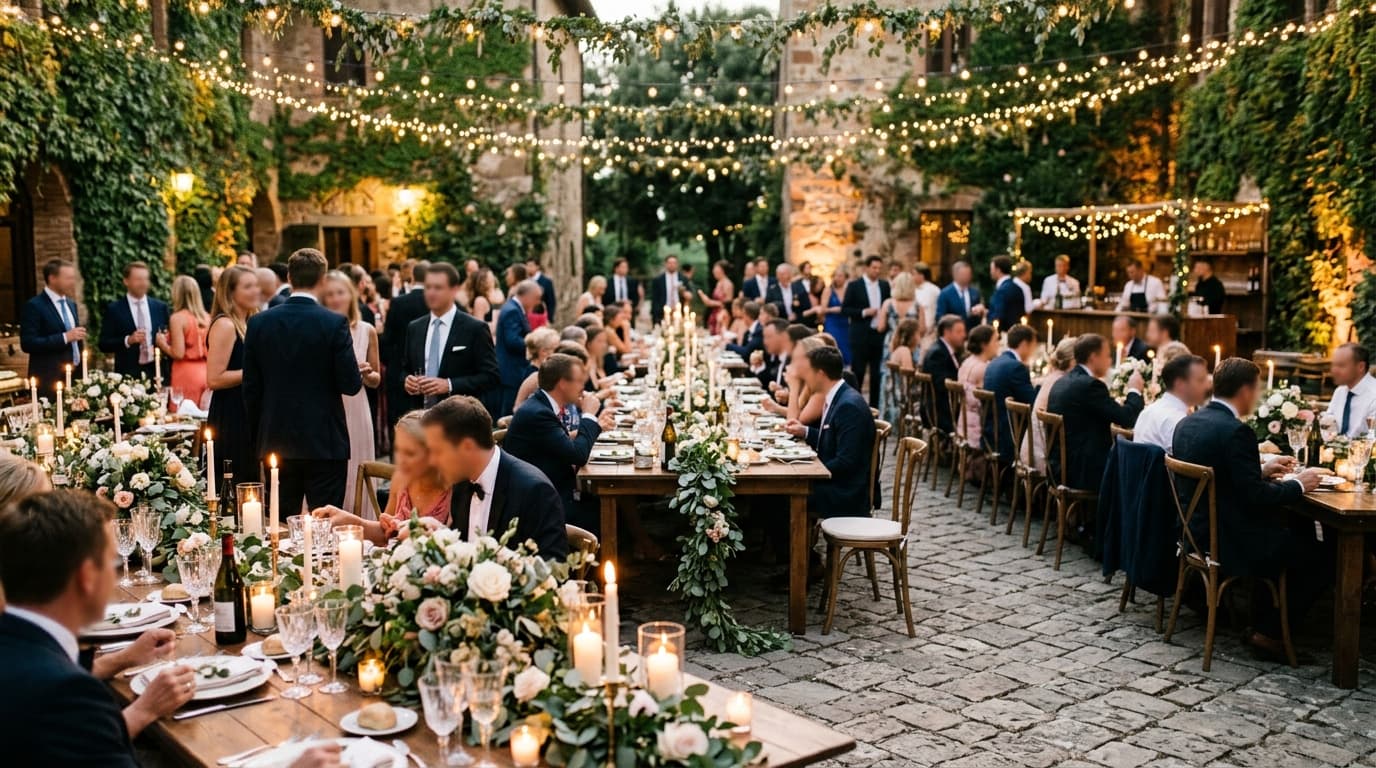
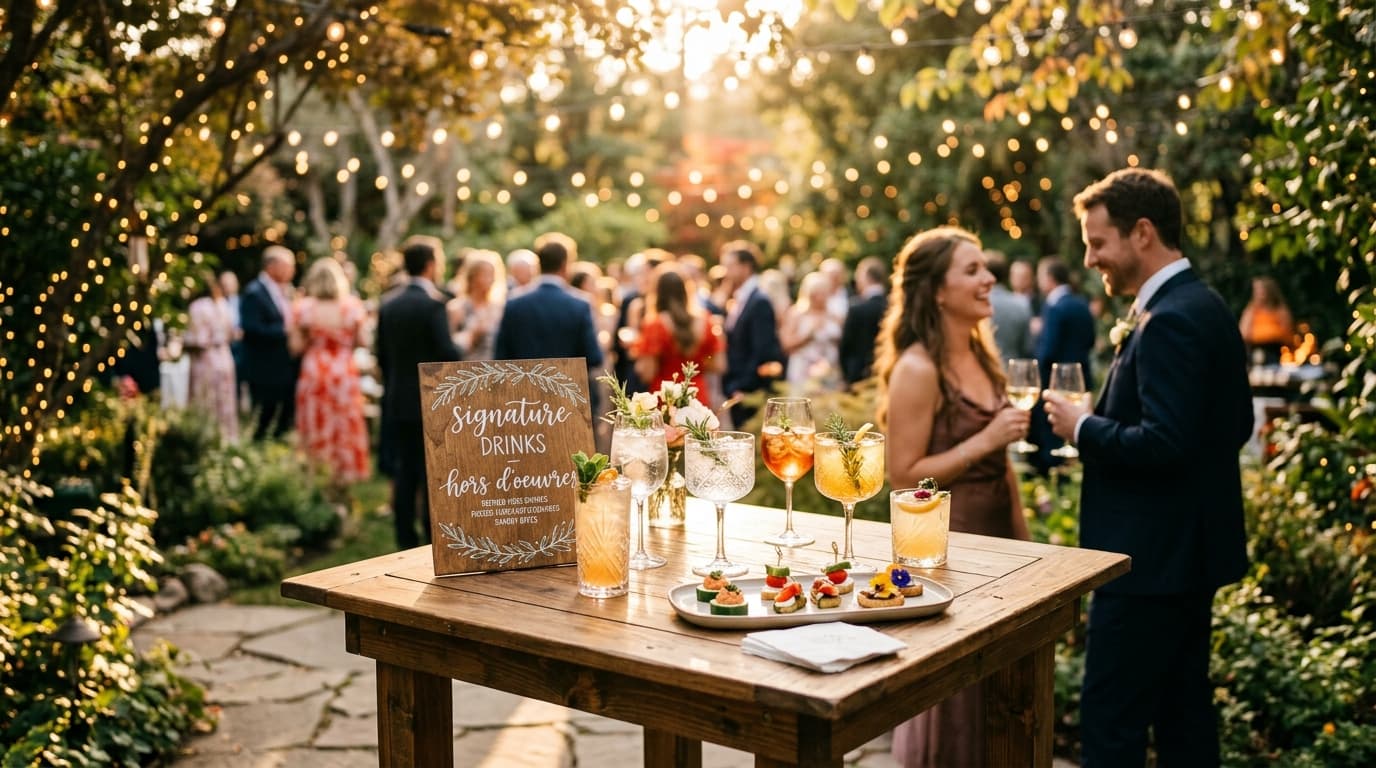
While the couple enjoys their private quiet time, guests head to the Terrace Balcony at 17:15 for cocktails and kosher hors d'oeuvres. At 18:15, everyone transitions into the Grand Ballroom for the couple's grand entrance and romantic first dance. Immediately following at 18:30, the band strikes up high-energy klezmer music for the Hora, lifting the couple on chairs as guests dance in celebratory concentric circles around them.
At 19:15, guests sit down for a multi-course dinner punctuated by family speeches. Once dinner service concludes at 20:30, guests recite Birkat Hamazon followed by Sheva Brachot, repeating the Seven Blessings over full cups of wine. The room then transitions into general open dancing at 20:45, keeping the dance floor alive until late in the evening. If you are planning surrounding events like the night before, review our Rehearsal Dinner Timeline Template for seamless multi-day coordination.
Jewish Wedding Timeline vs Standard Day-of Itinerary
Understanding how a Jewish wedding schedule differs from a standard wedding day itinerary is essential for proper vendor coordination and guest communication.
| Feature | Jewish Wedding Timeline | Standard Wedding Itinerary |
|---|---|---|
| Pre-Ceremony Focus | Includes ritual legal contracts (Ketubah) and veiling (Badeken). | Focused primarily on getting ready and hair/makeup. |
| Post-Ceremony Ritual | Demands 15–30 minutes of strict seclusion (Yichud). | Transitions directly to group photos or cocktail hour. |
| Reception Energy | Features immediate high-energy dancing (Hora) before dinner. | Typically features background music during dinner, dancing later. |
| Religious Obligations | Concludes meal with Birkat Hamazon and Sheva Brachot. | Concludes dinner with simple dessert cutting or toasts. |
Unlike standard timelines that push dancing to the end of the night, a Jewish wedding schedule opens the reception with immense energy. Incorporating the Hora early gets every guest involved right away, creating an electric atmosphere before dinner is served.
Who Should Use This Template?
This master schedule template is tailored for anyone involved in executing a seamless Jewish wedding celebration:
- Bridal Couples: Couples who want a stress-free framework balancing sacred religious customs with modern party elements.
- Wedding Coordinators & Planners: Event professionals needing a reliable blueprint that incorporates necessary buffer times for Jewish traditions.
- Rabbis & Officiants: Clergy members reviewing the sequence of pre-ceremony contract signings and chuppah timing.
- Caterers & Venue Directors: Hospitality staff coordinating complex kosher meal service, bar timing, and room flips.
- Photographers & Videographers: Media teams tracking rapid transitions between the badeken, chuppah, and yichud moments.
Whether you are hosting a large traditional affair or an intimate gathering, Chronolio offers tailored schedule management for all roles involved in running complex events.
How to Use This Template
- Download or Duplicate: Access the customizable template directly on Chronolio, or download the printable versions in .docx or .pdf format.
- Consult Your Rabbi: Review the proposed timing with your officiating rabbi to confirm sunrise/sunset requirements or local custom variations.
- Adjust Vendor Timings: Modify start times to reflect your venue access limits, band set-up times, and hair and makeup requirements.
- Distribute to Key Parties: Share finalized copies with your wedding party, caterer, photographer, and venue manager so everyone operates on the exact same schedule.
Tips for a Successful Jewish Wedding
To keep your wedding running smoothly, incorporate these practical advice tips from experienced event planners:
- Buffer the Ketubah Signing: Always add an extra 15 minutes to the ketubah signing window to accommodate late-arriving immediate family members or witnesses.
- Prepare the Yichud Room in Advance: Ensure your venue coordinator locks the yichud suite and stocks it with food, water, and personal belongings prior to the ceremony.
- Brief Your Photographer on the Badeken: The veiling ceremony happens fast amidst loud singing and crowding; make sure your media team knows where to stand.
- Clear Space for the Hora: Work with your venue to ensure tables are pushed back far enough from the dance floor to accommodate wide dance circles and chair lifting.
- Have Two Chairs Ready for the Hora: Place two sturdy, armless chairs near the dance floor in advance so friends can quickly lift the couple during the dancing.
- Coordinate Kosher Catering Timings: Ensure your caterer knows exactly when Birkat Hamazon will take place so meal service finishes cleanly before prayers.
Common Mistakes to Avoid
Even well-planned celebrations can run into friction if specific details are overlooked. Avoid these common timing mistakes:
- Scheduling Photographs During Yichud: Never cut into yichud time for portraits; this quiet seclusion is both a sacred requirement and a necessary mental break.
- Forgetting Pen and Ink for the Ketubah: Ensure your rabbi or wedding planner provides an archival, acid-free pen for signing the legal contract.
- Underestimating Guest Travel Between Spaces: If your badeken, chuppah, and reception take place in different venue wings, allow 10 to 15 minutes for guest movement.
- Delaying the Hora Until After Dinner: Dancing the Hora early sets a joyful tone for the whole night; waiting until after dinner leads to sluggish energy.
- Ignoring Sunset Times on Friday or Saturday: Failing to factor in Shabbat start or end times can create major conflicts with traditional rabbinical rules.
- Not Assigning Sheva Brachot Readers Early: Designate family members or friends for the post-dinner blessings before the wedding day so they are prepared to step up.
In Summary
- Complete Custom Coverage: Coordinates pre-ceremony customs like the ketubah signing and badeken with post-ceremony reception traditions.
- Sacred Seclusion Built-In: Allocates dedicated yichud time immediately after the chuppah for rest and breaking the couple's fast.
- High-Energy Structure: Schedules the vibrant Hora dance right after the grand entrance to energize the reception crowd.
- Rabbinical & Vendor Alignment: Provides exact time slots for ritual blessings, meals, photo sessions, and open dancing.
- Fully Customizable: Easily downloadable and editable to fit Orthodox, Conservative, Reform, or interfaith ceremony structures.
Planning a Jewish wedding requires balancing deep spiritual traditions with a dynamic evening celebration. By following this structured Jewish wedding timeline, you can navigate pre-ceremony contract signings, emotional veiling rites, outdoor chuppah vows, and high-energy circle dancing with effortless grace. For couples looking at alternative wedding structures, you may also find our guides on Christian Wedding Timeline: Schedule & Agenda, Catholic Wedding Timeline, or even an Elopement Timeline Template helpful when advising friends and family.
Customize Your Jewish Wedding TimelineFor authoritative background details on traditional Jewish wedding customs and blessings, you can consult guidance from My Jewish Learning or planning resources on The Knot.