






This Template at a Glance
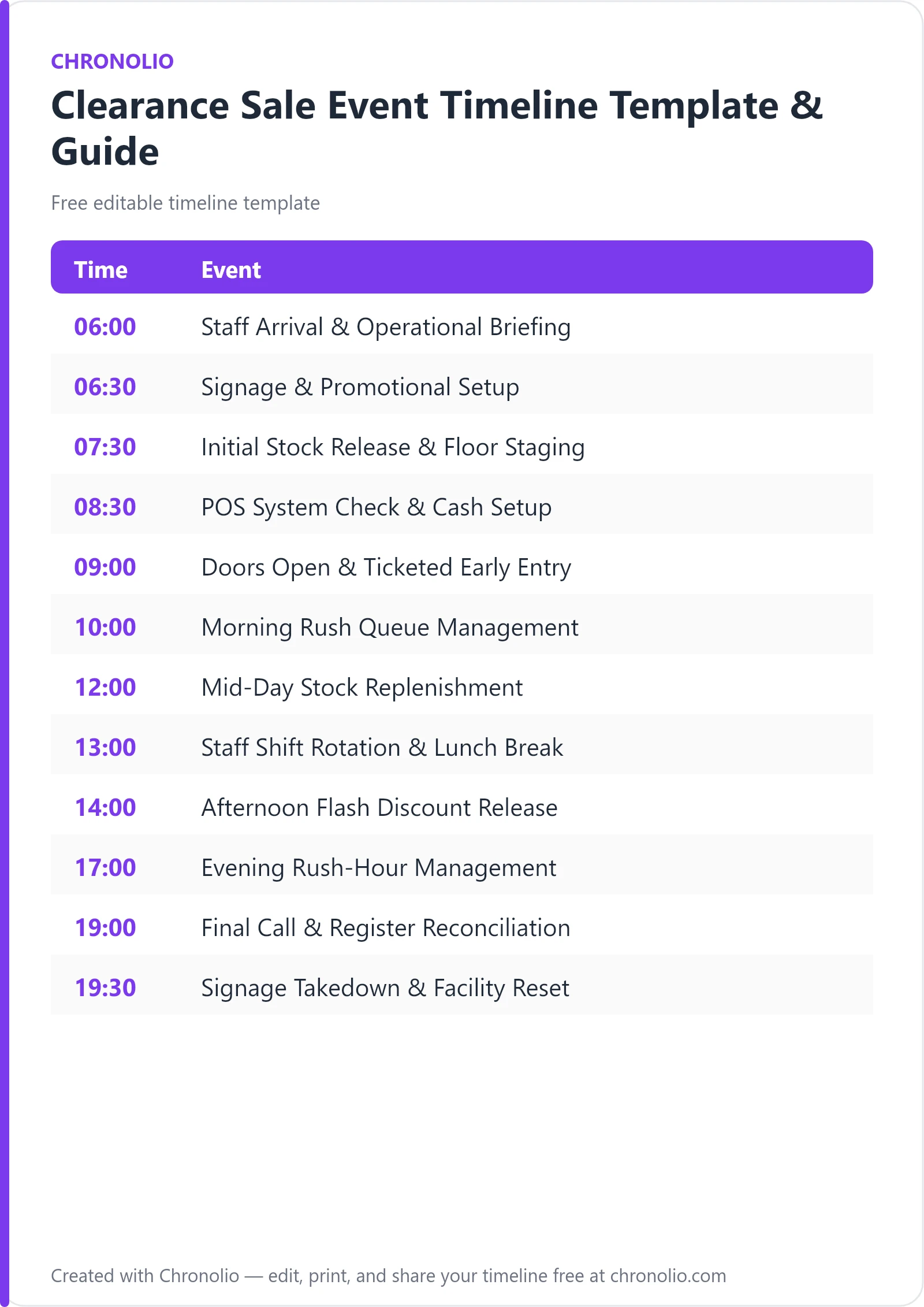
Here is the complete schedule this free template gives you — every time block, ready to edit, download, and share:
| Time | Event |
|---|---|
| 06:00 | Staff Arrival & Operational Briefing |
| 06:30 | Signage & Promotional Setup |
| 07:30 | Initial Stock Release & Floor Staging |
| 08:30 | POS System Check & Cash Setup |
| 09:00 | Doors Open & Ticketed Early Entry |
| 10:00 | Morning Rush Queue Management |
| 12:00 | Mid-Day Stock Replenishment |
| 13:00 | Staff Shift Rotation & Lunch Break |
| 14:00 | Afternoon Flash Discount Release |
| 17:00 | Evening Rush-Hour Management |
| 19:00 | Final Call & Register Reconciliation |
| 19:30 | Signage Takedown & Facility Reset |
What Is a Clearance Sale Event Timeline?
A clearance sale event timeline is an operational master schedule that structures every retail activity during a high-stakes liquidation or seasonal markdown event. Running a successful retail blowout demands far more than putting up discount signs and opening the doors; it requires military-grade coordination across warehouse teams, floor marshals, point-of-sale cashiers, and store management.
Drawing from years of managing high-footfall promotional blowouts, this guide and template reflect battle-tested retail frameworks endorsed by industry standards like the National Retail Federation. Just as corporate governance relies on a structured board meeting timeline template to keep executive sessions productive, a retail operation requires a firm schedule to prevent bottlenecked registers, aisle congestion, and depleted display racks.
Using this schedule ensures that signage setup, stock release, and rush-hour management execute smoothly from 06:00 staff briefings through late-night store lockup.
Customize Your Clearance Sale Timeline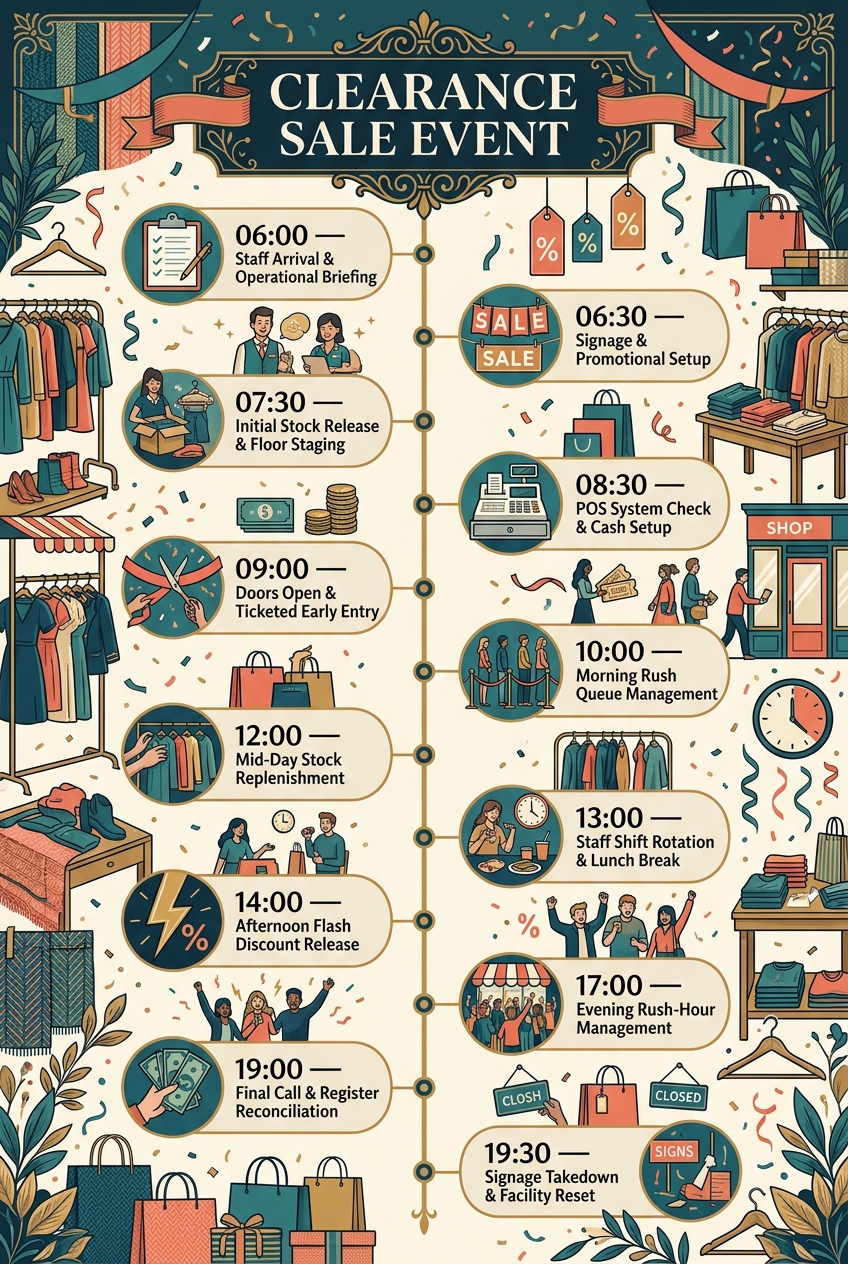
Why Clearance Sale Events Need a Timeline
High-volume sales events generate intense floor pressure within minutes of opening. Without a synchronized run-of-show, store employees face chaotic stock depletion, confused entry lines, technical point-of-sale failures, and severe checkout bottlenecks. A structured timeline establishes clear operational control across all store departments before doors open to the public.
Beyond maintaining order, a precise operational schedule safeguards retail revenue. Scheduling planned stock releases and flash discounts keeps customer momentum high throughout the afternoon, turning quiet mid-day hours into profitable sales surges. Floor marshals and security personnel rely on set timing milestones to shift from morning entry queue management to evening exit control seamlessly.
Finally, an established schedule protects staff well-being and operational safety. Staggering employee lunch breaks guarantees uninterrupted cash register coverage while keeping staff rested during peak shopping surges. Much like planning consumer celebrations with an anniversary party schedule template or a birthday party timeline template, maintaining structured shift transitions prevents staff burnout and ensures an efficient shopper experience.
What to Include in a Clearance Sale Event Timeline
A robust retail clearance timeline must account for background logistics, front-of-house crowd management, and financial reconciliation. Key operational components include:
- Pre-Opening Logistics: Staff briefings, security safety walkthroughs, and safety barrier installation.
- Visual Merchandising: Promotional exterior flags, directional hanging signage, and price markdown poster placement.
- Inventory Staging: Initial warehouse stock migration, bin staging, and sales floor table organization.
- Technology & POS Readiness: Barcode scanner testing, receipt roll restocking, cash float loading, and software discount validation.
- Customer Entry Protocols: Managed VIP/ticketed early access and main door capacity control.
- Crowd & Queue Management: Outdoor stanchion placement, aisle routing, and floor marshal deployment.
- Inventory Replenishment: Scheduled warehouse stock drops and display table reorganization.
- Staff Maintenance: Staggered meal break rotations and employee lounge refreshment management.
- Promotional Milestones: Timed flash discounts and department-specific sales announcements.
- Store Closing & Audit: Closing announcements, register reconciliation, revenue auditing, and final venue lockdown.
Phase 1: Pre-Opening Preparation & Setup
| Time | Event |
|---|---|
| 06:00 | Staff Arrival & Operational Briefing |
| 06:30 | Signage & Promotional Setup |
| 07:30 | Initial Stock Release & Floor Staging |
| 08:30 | POS System Check & Cash Setup |
The success of a major retail event is determined long before the first shopper steps inside. At 06:00, retail staff and security personnel gather at the Main Store Entrance and Staff Breakroom. Store leadership delivers a concise operational briefing outlining individual shift roles, door management procedures, safety exit clearances, and key sales revenue targets. Security conducts a mandatory safety walkthrough to inspect fire exits and verify crowd barrier placement.
Following the briefing, visual merchandising teams move to the Storefront Exterior and Main Aisles at 06:30. Exterior promotional flags, banner stands, and price-markdown posters are mounted securely along the building perimeter, while high-visibility aisle signs guide shoppers toward primary clearance zones. At 07:30, warehouse logistics teams begin rolling out the primary wave of clearance stock, filling display tables and floor bins across designated departments. Finally, cashiers assemble at Checkout Counters at 08:30 to test barcode scanners, verify discount promotional codes in the POS network, restock paper rolls, and secure cash floats.
Phase 2: Store Opening & Morning Rush
| Time | Event |
|---|---|
| 09:00 | Doors Open & Ticketed Early Entry |
| 10:00 | Morning Rush Queue Management |
Managing initial customer influx requires controlled door management to prevent stampedes or checkout gridlock. At 09:00, store doors open strictly for ticketed early-bird holders and VIP loyalty club members at the Main Entrance. Greeting staff manage entry pacing using turnstiles or handheld clickers, creating an orderly flow into primary shopping zones.
By 10:00, general public access begins, bringing the day's first major customer wave. Floor marshals immediately activate exterior stanchion queue systems in the Store Atrium and outdoor entry areas to maintain safety. Inside, roving floor staff assist shoppers, answer pricing inquiries, and proactively direct customers toward open, low-traffic register lanes to keep checkout wait times under five minutes.
Phase 3: Mid-Day Operations & Flash Promotions
| Time | Event |
|---|---|
| 12:00 | Mid-Day Stock Replenishment |
| 13:00 | Staff Shift Rotation & Lunch Break |
| 14:00 | Afternoon Flash Discount Release |
Mid-day operations focus on floor recovery, inventory replenishment, and maintaining customer energy levels. At 12:00, as morning customer density naturally tempers, warehouse personnel transfer secondary stock racks from backroom storage into the Central Display Area. Floor teams rapidly re-organize disheveled tables and restock high-demand items that sold out during early morning access.
At 13:00, store employees commence staggered lunch rotations in the Employee Lounge. Staggering breaks by floor sector ensures that 100% of register lanes remain operational while floor marshals maintain presence in high-traffic departments. Refreshments and coffee in the lounge keep staff energized for the evening surge. At 14:00, public address systems announce an unannounced afternoon flash discount release across the Apparel and Electronics departments, driving renewed shopping urgency among mid-day visitors.
Phase 4: Evening Rush, Reconciliation & Wrap-Up
| Time | Event |
|---|---|
| 17:00 | Evening Rush-Hour Management |
| 19:00 | Final Call & Register Reconciliation |
| 19:30 | Signage Takedown & Facility Reset |
The post-work commute triggers the day's heaviest foot traffic surge. Starting at 17:00 across the Entire Sales Floor and Exit Gates, extra staff members reassign from stockroom duty to line-busting roles at the main registers. Security personnel closely monitor entry capacity, ensuring emergency egress corridors remain completely unobstructed across all primary departments.
At 19:00, public announcements notify customers of store closing, while cashiers process final sales transactions. Lead cashiers begin cash float counting and daily revenue auditing at the Checkout Counters. Once customers exit at 19:30, facilities teams dismantling promotional banners, return leftover merchandise to backroom storage, sweep sales aisles, and complete store lockdown with facility managers.
Clearance Sale Event Timeline vs Clearance Sale Event Checklist
Retail teams often confuse a clearance sale timeline with a sales checklist. While both tools are vital, they serve distinct operational functions during event execution.
| Operational Feature | Clearance Sale Event Timeline | Clearance Sale Event Checklist |
|---|---|---|
| Primary Purpose | Defines when specific operational actions must occur. | Defines what physical items or tasks must be completed. |
| Structure | Chronological hour-by-hour operational schedule. | Categorized inventory or departmental task list. |
| Focus Area | Customer flow, staffing shifts, stock drops, POS audits. | Signage hardware, scanner testing, banner mounting. |
| Target User | Floor managers, duty supervisors, leads. | Individual store clerks, cashiers, stockroom workers. |
While a checklist verifies that price tags and banners exist, the timeline ensures that inventory releases and shift handovers execute precisely when floor traffic demands them.
Who Should Use This Template?
This master operational timeline is designed for retail professionals managing high-volume commercial events, including:
- Department Store Managers: Coordinating multi-floor sales, security teams, and cash registers.
- Outlet & Boutique Owners: Managing single-location liquidation events or end-of-season blowouts.
- Warehouse Clearance Leads: Overseeing pallet sales, temporary venue setups, and bulk inventory liquidation.
- Pop-Up Store Operators: Running short-duration markdown sales with temporary floor teams.
- Retail Regional Directors: Standardizing sale schedules across multiple franchise locations.
Chronolio offers specialized features for various roles involved in event execution, allowing floor leads, security directors, and logistics teams to collaborate on a single live schedule.
How to Use This Template
Implementing this timeline template for your retail store takes four simple steps:
- Customize or Export the Schedule: Access the editable online template or download the offline Word document or PDF guide.
- Set Event Operating Hours: Adjust start times, door-opening schedules, and flash sale announcements to match your store's operating hours.
- Assign Departmental Leads: Designate specific floor leads, cash handling supervisors, and security officers to each chronological block.
- Distribute to Store Personnel: Print physical copies for breakroom noticeboards and distribute digital versions to key department heads during pre-sale prep meetings.
Tips for a Successful Clearance Sale Event
Executing a flawless retail blowout requires combining precise timing with smart customer management:
- Pre-program POS Discount Codes: Verify that all promotional markdown barcodes scan accurately prior to store opening to eliminate manual pricing adjustments at checkout.
- Implement Stanchion Queue Control: Position physical stanchion barriers outside the main entrance long before opening to manage entry queues safely.
- Overstaff Early & Evening Surges: Schedule maximum cashier coverage during initial store opening (09:00–11:00) and post-work rush hours (17:00–19:00).
- Utilize Public Address Announcements: Broadcast periodic flash discount announcements and directional register reminders to spread foot traffic evenly across departments.
- Maintain Dedicated Stockroom Logistics: Keep dedicated stock runners on the sales floor so floor clerks never leave their department zones to fetch merchandise.
- Establish a Clear Return & Exchange Policy: Post temporary clearance policy signs at every checkout counter to reduce cash-wrap transaction times.
- Keep Emergency Corridors Open: Conduct hourly security checks to ensure empty display boxes and excess inventory racks do not block main fire aisles.
Common Mistakes to Avoid
Avoid these frequent retail scheduling missteps to ensure a profitable and safe clearance event:
- Delaying POS and Scanner Audits: Waiting until doors open to test register hardware causes immediate checkout bottlenecks and frustrated early buyers.
- Unplanned Inventory Drops: Rolling out restock pallets during peak shopping hours blocks aisles and creates safety hazards.
- Neglecting Staggered Staff Breaks: Allowing staff to take unsynchronized lunch breaks leaves cash registers unmanned during busy mid-day shopping hours.
- Underestimating Entry Line Safety: Failing to erect external crowd stanchions leads to chaotic store entry and potential safety hazards.
- Oversaturating Early Announcements: Announcing all flash sales at once overwhelms specific departments; stagger announcements throughout the afternoon.
- Inadequate Cash Float Prep: Failing to provide cashiers with sufficient small bills causes register delays during morning transactions.
In Summary
- What it is: A complete 06:00 to 20:30 master operational schedule governing high-volume retail clearance sales.
- Who it is for: Store managers, warehouse leads, outlet owners, pop-up operators, and retail supervisors.
- Key Milestones: Staff briefing, promotional signage installation, stock releases, POS validation, VIP entry, rush-hour queue control, flash sales, and nightly cash auditing.
- Primary Operational Goal: Maximizes merchandise liquidation and sales revenue while maintaining customer safety and checkout speed.
- Flexibility: Easily tailored for boutique retail shops, pop-up events, department store liquidations, or warehouse blowouts.
Planning a commercial liquidation requires strict schedule execution to convert high foot traffic into efficient revenue turnover. Similar to coordinating personal celebrations with a baby shower timeline template or a christian wedding timeline, retail events depend on clear structure to keep guests comfortable and operations running on schedule. Using this comprehensive clearance sale framework ensures your retail staff, stockroom logistics, cashier teams, and security personnel deliver a seamless, high-profit sales event.
Customize Your Clearance Sale Timeline