







This Template at a Glance
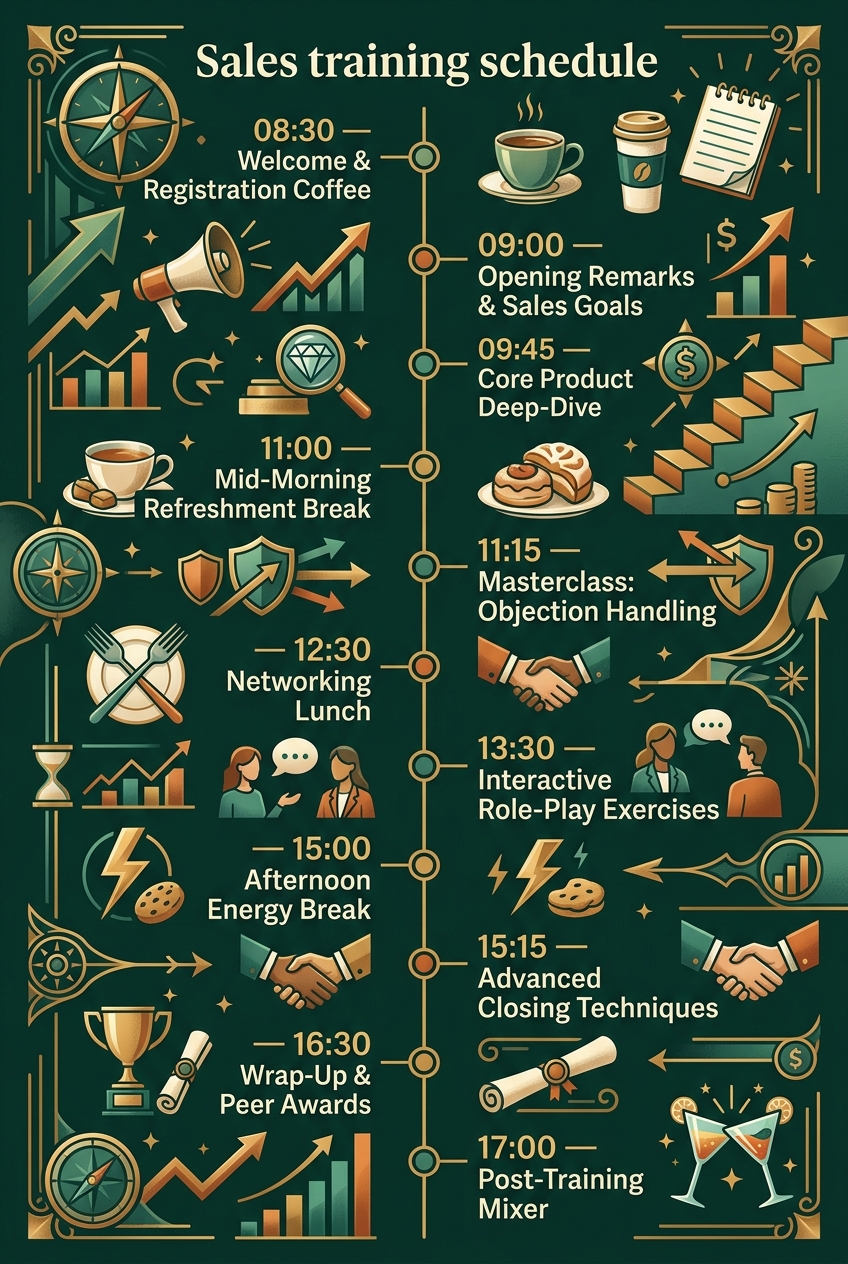
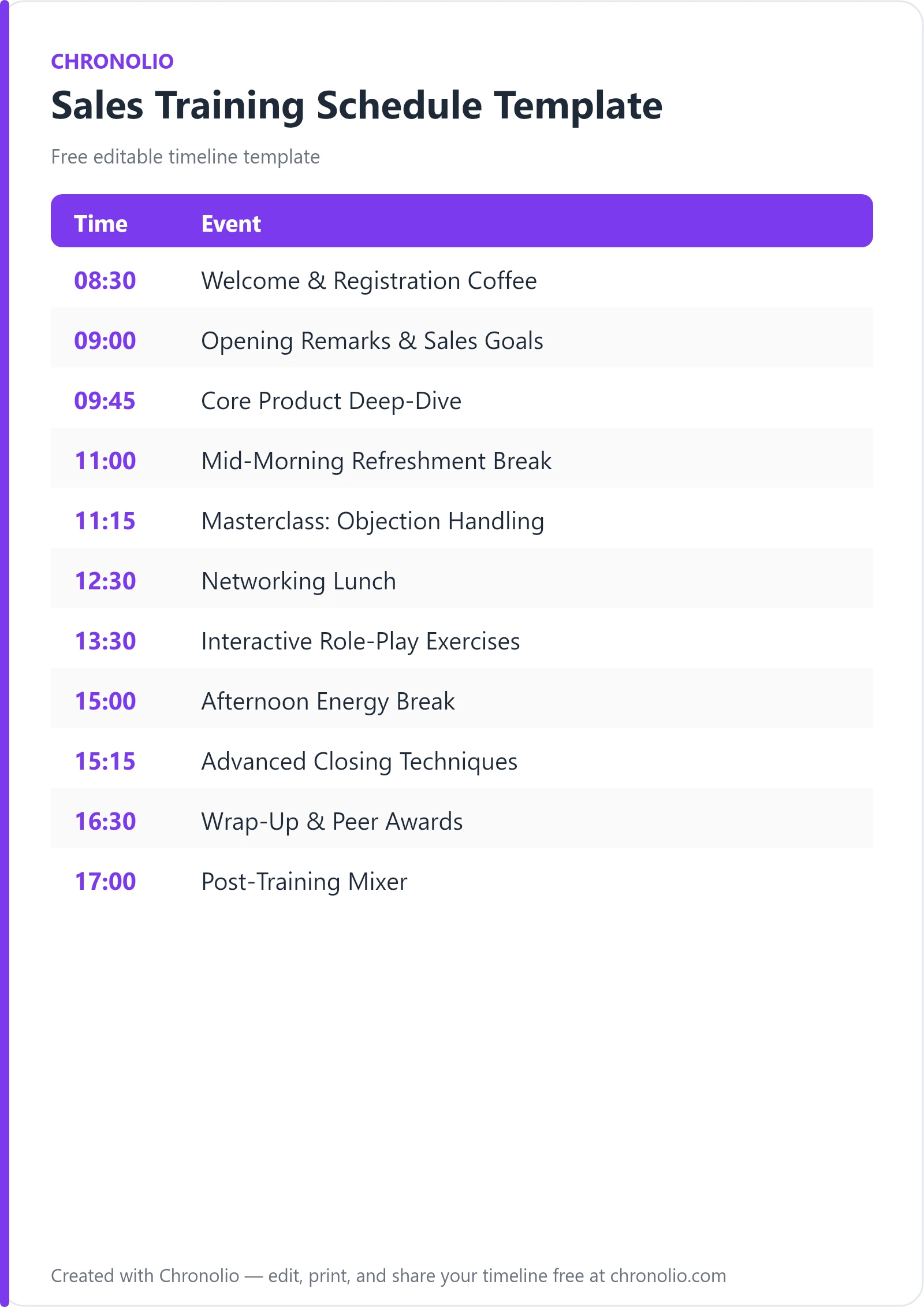
Here is the complete schedule this free template gives you — every time block, ready to edit, download, and share:
| Time | Event |
|---|---|
| 08:30 | Welcome & Registration Coffee |
| 09:00 | Opening Remarks & Sales Goals |
| 09:45 | Core Product Deep-Dive |
| 11:00 | Mid-Morning Refreshment Break |
| 11:15 | Masterclass: Objection Handling |
| 12:30 | Networking Lunch |
| 13:30 | Interactive Role-Play Exercises |
| 15:00 | Afternoon Energy Break |
| 15:15 | Advanced Closing Techniques |
| 16:30 | Wrap-Up & Peer Awards |
| 17:00 | Post-Training Mixer |
What Is a Sales Training Schedule?
A sales training schedule is an actionable operational timeline that coordinates the flow, topic pacing, and interactive workshops for a corporate sales enablement event. Running an effective sales intensive requires balancing dense information delivery with hands-on skill execution. Without a precise running order, sessions frequently run over time, key value propositions get rushed, and account representatives suffer from audience fatigue before reaching critical practical exercises.
This template reflects real-world sales training structures and industry best practices gathered from high-performing enterprise revenue teams. Whether you are launching a new product line, onboarding incoming SDRs, or refining enterprise closing strategies, maintaining a structured schedule ensures every minute translates into quota-attainment potential. Much like organizing a structured corporate agenda with a board meeting timeline template, establishing a clear timetable keeps presenters accountable and guarantees that high-priority revenue targets remain front and center throughout the day.
Build Your Sales Training Schedule
Why Sales Trainings Need a Timeline
In the fast-paced world of revenue operations, time away from the phones and client meetings represents an immediate opportunity cost. When sales representatives sit in a day-long training event, maximizing engagement and learning retention is essential to justify the pull from active pipeline management. A rigid yet realistic schedule sets clear expectations for attendees, allowing them to focus entirely on skill development without worrying about unaddressed emails or missed client follow-ups.
Furthermore, dynamic sales training relies heavily on cross-functional facilitation. Product managers, VP level executives, sales engineers, and external leadership coaches often present different modules throughout the day. A well-communicated schedule ensures seamless handoffs between speakers in Auditorium A, breakout leaders in designated seminar spaces, and catering staff delivering meals. According to research on adult learning frameworks published by Harvard Business Review, structured cognitive breaks directly increase concept retention and field execution rate.
Finally, an established schedule gives event facilitators room to enforce discipline around role-play exercises and peer feedback. Interactive sessions tend to expand organically if left unmonitored. By adhering to designated time blocks for discovery simulations and objection dissection, trainers ensure that every rep receives direct, constructive feedback before moving to advanced closing strategies.
What to Include in a Sales Training Schedule
To build a balanced, high-yield sales workshop, your operational schedule should incorporate several core building blocks:
- Registration and Informal Networking: Time for attendees to settle in, download updated pitch decks, and connect with peers over coffee.
- Executive Vision and Goal Alignment: Strategic opening remarks from revenue leadership connecting daily training to quarterly targets and key performance indicators (KPIs).
- Core Product and Value Proposition Deep-Dive: Comprehensive technical and market positioning updates, focusing on competitive differentiators and updated pricing tier structures.
- Interactive Skill Workshops: Framework-based instruction covering discovery questions, cold outreach tactics, and objection handling scripts.
- Peer Role-Play and Real-Time Feedback: Practical breakout sessions where reps simulate sales calls, test value messaging, and receive immediate coaching.
- Advanced Closing and Urgency Tactics: Instructional modules focused on navigating complex multi-threaded deals, security reviews, and late-stage deal inertia.
- Recognition and Team Building: An informal wrap-up featuring peer awards, certificates, and a casual evening mixer to reinforce corporate culture and team alignment.
Morning Strategy & Product Knowledge
| Time | Event |
|---|---|
| 08:30 | Welcome & Registration Coffee |
| 09:00 | Opening Remarks & Sales Goals |
| 09:45 | Core Product Deep-Dive |
| 11:00 | Mid-Morning Refreshment Break |
The opening phase of the training day sets the tone for professional rigor and strategic focus. Starting at 08:30 in the Main Foyer, allowing reps time to settle in with morning coffee prevents late arrivals from disrupting the official morning kickoff. Facilitators use this half-hour window to distribute physical training workbooks, verify name badges, and ensure everyone has logged into the internal learning portal.
At 09:00, the energy shifts to Auditorium A, where executive leaders connect training modules directly to company revenue milestones. Following strategic goal alignment, the agenda transitions directly into an intensive product deep-dive. This sequence is intentional: sales reps absorb complex technical specifications, new software features, and pricing changes best when their focus is fresh. While planning social events like an anniversary party schedule or a birthday party timeline centers around guest entertainment flow, corporate training requires front-loading high-density cognitive content before morning attention spans wane. The morning block concludes with a dedicated refreshment break in the Lounge Area, giving reps time to process technical details before transitioning into active skill workshops.
Core Skills & Practical Application
| Time | Event |
|---|---|
| 11:15 | Masterclass: Objection Handling |
| 12:30 | Networking Lunch |
| 13:30 | Interactive Role-Play Exercises |
The late-morning and early-afternoon block moves the event from passive listening to active skill acquisition. Gathering in Training Room 101 at 11:15, reps examine real-world buyer pushback surrounding pricing structure, contract terms, and competitor offerings. Presenting concrete frameworks—such as the Feel-Felt-Found model or reverse-discovery questioning—equips reps with actionable response scripts they can deploy immediately in field calls.
After an intensive masterclass, a structured one-hour lunch in the Executive Dining Hall serves a dual purpose. Beyond providing physical nourishment, seating arrangements organized by sales region or account tier foster peer-to-peer knowledge sharing. When reps return to Breakout Rooms A-D at 13:30, they immediately put morning theories into practice through interactive role-play scenarios. Pairing account executives with senior sales enablement trainers ensures every participant receives immediate, highly specific feedback on their tone, discovery depth, and objection handling execution.
Advanced Closing & Team Recognition
| Time | Event |
|---|---|
| 15:00 | Afternoon Energy Break |
| 15:15 | Advanced Closing Techniques |
| 16:30 | Wrap-Up & Peer Awards |
| 17:00 | Post-Training Mixer |
The final segment of the day addresses late-stage deal execution and celebrates team achievements. Following a quick 15-minute energy break in the Lounge Area to counter the mid-afternoon slump, reps gather back in Training Room 101 for an advanced module on closing techniques. This session tackles late-stage deal inertia, legal procurement hurdles, and strategies for creating genuine deal urgency without compromising margins. For sales enablement teams looking to benchmark industry sales strategies, resources from platforms like HubSpot Sales Blog provide excellent supplementary frameworks to integrate into this module.
At 16:30, the team reunites in Auditorium A for a high-energy conclusion. Acknowledging top performers from the afternoon role-play simulations with peer-voted awards and presenting certificates of completion builds immense team morale and camaraderie. The day transitions seamlessly into an informal post-training mixer on the Rooftop Terrace at 17:00, giving account executives, sales engineers, and senior leaders a relaxed venue to build internal relationships, celebrate shared goals, and unpack takeaways from the day.
Sales Training Schedule vs Sales Meeting Agenda
Understanding the difference between a dedicated training schedule and a routine sales meeting agenda helps event planners structure the appropriate depth and time allocations for their participants:
| Feature | Sales Training Schedule | Sales Meeting Agenda |
|---|---|---|
| Primary Focus | Long-term skill development, product mastery, and practical role-play exercises. | Short-term pipeline review, quarterly forecast updates, and tactical deal blockers. |
| Duration | Full-day or multi-day intensive workshop (6 to 8 hours per day). | Short recurring session (30 to 90 minutes weekly or monthly). |
| Participant Role | Active practice, peer role-playing, and receiving real-time coaching feedback. | Reporting individual metrics, pipeline updates, and team announcements. |
| Content Type | Frameworks, objection handling scripts, methodology, and live call teardowns. | Revenue metrics, CRM hygiene updates, immediate deal strategy, and goal tracking. |
While a sales meeting agenda centers on status updates and immediate deal movement, a sales training schedule focuses on behavioral transformation. Investing dedicated, uninterrupted time into role-play exercises ensures that sales reps refine their closing techniques in a safe learning environment rather than experimenting on live customer prospects.
Who Should Use This Template?
This versatile schedule is engineered for corporate revenue organizations and corporate enablement teams looking to deliver impactful, structured learning experiences. It supports various organizational roles across multiple business structures, including:
- Sales Enablement Managers: Designing comprehensive onboarding programs or quarterly upskilling intensives.
- VPs of Sales and Revenue Directors: Planning annual sales kickoffs (SKO) and aligning team strategies with company revenue targets.
- Enterprise Account Executives & SDR Managers: Structuring focused breakout sessions, script practice, and cold calling workshops.
- Corporate Trainers and Sales Consultants: Delivering standardized, high-energy sales methodology workshops to client organizations.
- SaaS Startups and High-Growth Revenue Teams: Scaling sales operations rapidly while maintaining pitch consistency across new hires.
Whether your company employs a consultative enterprise selling model or a high-velocity transactional sales model, this template provides the structural blueprint necessary for success. Learn more about customized event management solutions for your specific leadership role on our dedicated role support page.
How to Use This Template
Implementing this timeline for your upcoming sales workshop is simple and straightforward:
- Download or Duplicate the Template: Access the schedule in your preferred format using our .docx template download or .pdf template download.
- Set Your Event Date and Location: Fill in venue details, breakout room designations, and audio/visual setup requirements.
- Adjust Time Blocks for Your Methodology: Tailor specific workshop sessions to fit your internal methodology, whether MEDDPICC, Challenger Selling, or SPIN Selling.
- Assign Module Facilitators: Clearly designate session leaders, product marketing experts, and role-play judges for each scheduled block.
- Distribute to Attendees in Advance: Share the final agenda with reps, sales leadership, and catering vendors at least one week prior to the event.
Tips for a Successful Sales Training Session
- Pre-Assign Role-Play Pairs: Avoid lost time and awkward shuffling in breakout rooms by pre-assigning role-play partners and room assignments before the training day begins.
- Mix Senior Reps with New Hires: Pair seasoned top performers with recently onboarded SDRs during practical exercises to encourage organic mentorship and practical knowledge transfer.
- Enforce Strict Timekeeping: Appoint a designated timekeeper or use a visible digital countdown clock in main auditoriums to keep sessions running on schedule.
- Incorporate Live Call Dissections: Use real recorded customer calls (both successful wins and lost deals) during objection handling modules to ground frameworks in reality.
- Provide High-Protein Meals and Snacks: Avoid heavy, carbohydrate-dense catered lunches that cause afternoon sluggishness during critical role-play blocks.
- Capture Actionable Follow-Up Commitments: Require every representative to write down two specific call adjustments they will implement in their sales pipeline starting the next morning.
Common Mistakes to Avoid
- Overloading Presentation Slides: Bombarding reps with dozens of text-heavy slides leads to cognitive overload; keep presentations visual and brief, focusing heavily on discussion.
- Skipping Practical Role-Play: Restricting the agenda strictly to passive presentations deprives reps of the muscle memory needed to handle complex buyer objections in live environments.
- Neglecting Technical Infrastructure Check: Failing to test microphones, slide presentation clickers, and Zoom breakout room configurations prior to the 08:30 registration start time.
- Encroaching on Break Times: Cutting short morning or afternoon energy breaks to catch up on delayed presentations frustrates participants and lowers energy for subsequent sessions.
- Failing to Track Post-Training Execution: Conducting an engaging workshop without following up in regular one-on-ones leads reps to revert quickly to old selling habits.
In Summary
- A sales training schedule structures corporate enablement sessions to maximize skill retention, product mastery, and practical execution.
- Designed specifically for sales enablement directors, revenue leaders, enterprise account executives, and corporate sales facilitators.
- Features a strategic balance between executive vision, technical product deep-dives, objection handling masterclasses, and interactive role-play.
- Incorporates dedicated energy breaks and unstructured networking opportunities to sustain engagement throughout a dense, full-day agenda.
- Ensures all cross-functional presenters, venue facilitators, and executive leaders remain aligned on timing and room assignments.
- Easily customizable and available for immediate export in Microsoft Word and PDF formats for seamless team distribution.
Planning a corporate sales training workshop requires rigorous time management and a clear operational structure. By utilizing this comprehensive schedule, you ensure that your revenue team receives the high-impact coaching, practical role-play practice, and strategic alignment needed to consistently surpass quarterly quotas.
Build Your Sales Training Schedule