





This Template at a Glance
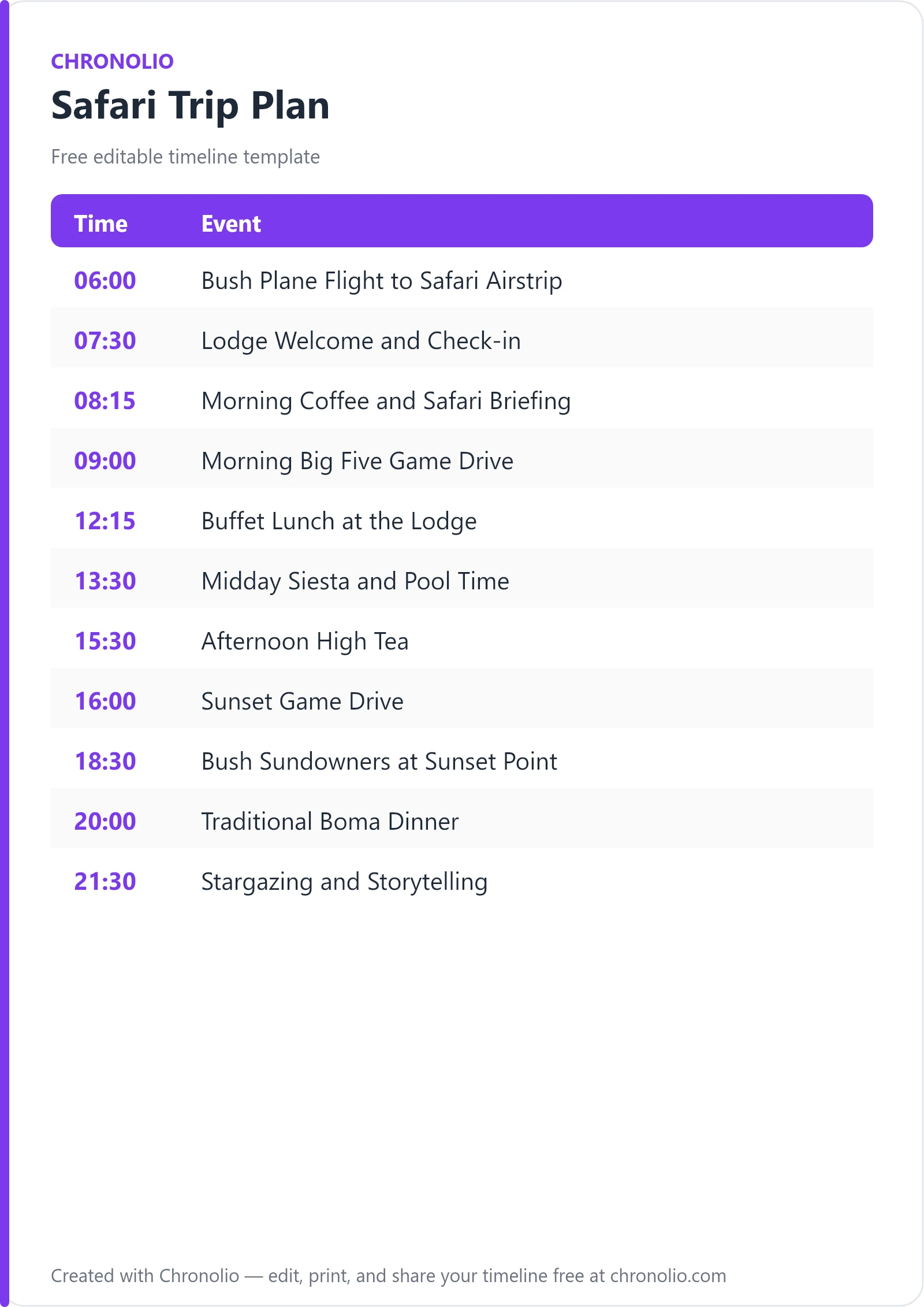
Here is the complete schedule this free template gives you — every time block, ready to edit, download, and share:
| Time | Event |
|---|---|
| 06:00 | Bush Plane Flight to Safari Airstrip |
| 07:30 | Lodge Welcome and Check-in |
| 08:15 | Morning Coffee and Safari Briefing |
| 09:00 | Morning Big Five Game Drive |
| 12:15 | Buffet Lunch at the Lodge |
| 13:30 | Midday Siesta and Pool Time |
| 15:30 | Afternoon High Tea |
| 16:00 | Sunset Game Drive |
| 18:30 | Bush Sundowners at Sunset Point |
| 20:00 | Traditional Boma Dinner |
| 21:30 | Stargazing and Storytelling |
What Is a Safari Trip Plan?
A safari trip plan is a master operational schedule that coordinates daily transfers, field excursions, wildlife tracking, and lodge hospitality across wilderness reserves. Operating a safari lodge or guiding guests through remote national parks requires absolute precision, as animal behavior, light conditions, and aviation timetables dictate the pace of every single day.
This daily schedule balances high-intensity 4x4 game drives with relaxing camp rituals like afternoon high tea and evening boma dinners. Grounded in real-world African lodge management practices, this template reflects proven safari schedules refined across wilderness reserves in Kenya, Tanzania, South Africa, and Botswana. Whether you are leading a group safari, organizing an executive wilderness retreat, or traveling with family, having an established operational flow keeps vehicle logistics, kitchen service, and ranger briefings running on time while giving guests an unforgettable experience in the bush. You can also download ready-to-use printables in .docx and .pdf formats.
Customize Your Safari Trip Plan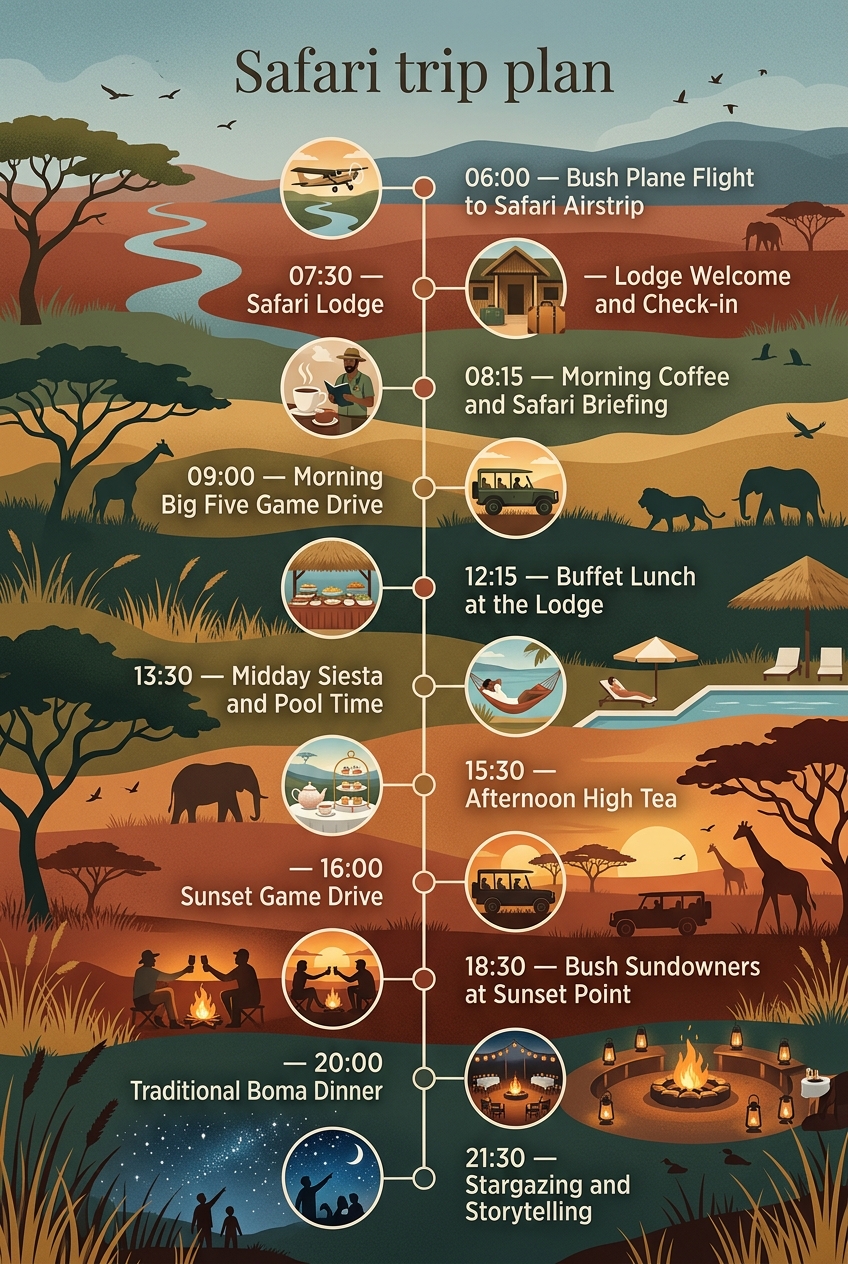
Why Safaris Need a Timeline
Planning a wilderness expedition without a strict running order leads to missed wildlife opportunities, fatigued guests, and logistical confusion across field staff. Animals do not adjust their hunting habits for delayed breakfast buffets; predators like lions and cheetahs move actively at dawn before retreating deep into shade when the equatorial sun peaks. Structuring your day around wildlife patterns ensures guests visit key tracks when animal activity is highest.
A clear timeline also streamlines communication between your head ranger, aviation charter crews, hospitality staff, and vehicle drivers. When transfers from remote airstrips, safety orientations, and kitchen shifts sync flawlessly, guests feel fully immersed in nature without experiencing administrative stress.
Finally, an established daily tempo protects guest safety and wellbeing in isolated bush environments. Enforcing fixed rest windows during midday heat prevents heat stroke, while clear dusk cutoff times ensure vehicles return to camp or designated lookout points before nightfall makes navigation hazardous.
What to Include in a Safari Trip Plan
Every comprehensive bush itinerary must incorporate core operational, safety, and hospitality milestones:
- Aviation & Ground Transfers: Clear arrival times for light aircraft, bush airstrip pickups, and luggage drop-offs.
- Safety & Field Briefings: mandatory ranger orientations covering wildlife rules, camp boundary guidelines, and emergency protocols.
- Dawn & Dusk Game Drives: Primary field tracks scheduled during peak wildlife movement hours.
- Midday Rest & Dining: Nourishing buffet meals and mandatory leisure windows during the hottest hours.
- Sunset Hospitality: Dedicated sundowner stops at scenic vantage points before dark.
- Evening Cultural Events: Traditional open-air boma dinners, campfire storytelling, and nocturnal astronomy sessions.
Morning Arrival and Dawn Game Drive
| Time | Event |
|---|---|
| 06:00 | Bush Plane Flight to Safari Airstrip |
| 07:30 | Lodge Welcome and Check-in |
| 08:15 | Morning Coffee and Safari Briefing |
| 09:00 | Morning Big Five Game Drive |
The early morning sequence establishes the tone for the entire safari experience. Flying into remote bush airstrips at dawn offers breathtaking aerial vistas of winding rivers and grazing herds before heat haze impacts flight stability. Coordinating light aircraft arrivals early allows ground staff to seamlessly transport guests from the airstrip to camp while the morning air remains crisp and cool.
Upon arrival at Savannah Safari Lodge Main Reception, guests receive a warm camp welcome with cold towels and fresh juices while staff transfer luggage straight to their tented suites. A quick briefing over fresh coffee on the lodge observation deck gives the head ranger time to review essential bush safety guidelines and outline current wildlife tracks across the reserve before vehicles depart for the morning drive across the Northern Plains.
Midday Relaxation and High Tea
| Time | Event |
|---|---|
| 12:15 | Buffet Lunch at the Lodge |
| 13:30 | Midday Siesta and Pool Time |
| 15:30 | Afternoon High Tea |
By noon, the savanna sun reaches peak intensity, forcing large mammals into deep shade and reducing wildlife sightings across open plains. Transitioning guests back to the Riverfront Dining Pavilion for lunch ensures vehicles stay off the trail during low-activity hours while kitchen teams showcase fresh regional cuisine overlooking active riverbanks.
The afternoon hours are specifically designated for guest recovery. Allowing two full hours for a traditional midday siesta lets travelers recharge in private air-conditioned suites or swim in the infinity pool. If you are hosting group retreats or milestone celebrations in conjunction with your trip, pair this schedule with our anniversary party schedule template to coordinate private evening toasts or group gatherings during free periods. Gathering on the main lounge terrace for high tea at 15:30 provides a gentle transition back to afternoon activity before evening tracking begins.
Sunset Safari and Bush Sundowners
| Time | Event |
|---|---|
| 16:00 | Sunset Game Drive |
| 18:30 | Bush Sundowners at Sunset Point |
As ambient temperatures cool in the late afternoon, nocturnal predators awaken and herbivores migrate toward waterholes. Returning to the reserve along the Acacia Ridge Track gives trackers a prime opportunity to spot leopards, spotted hyenas, and lions preparing for night hunts.
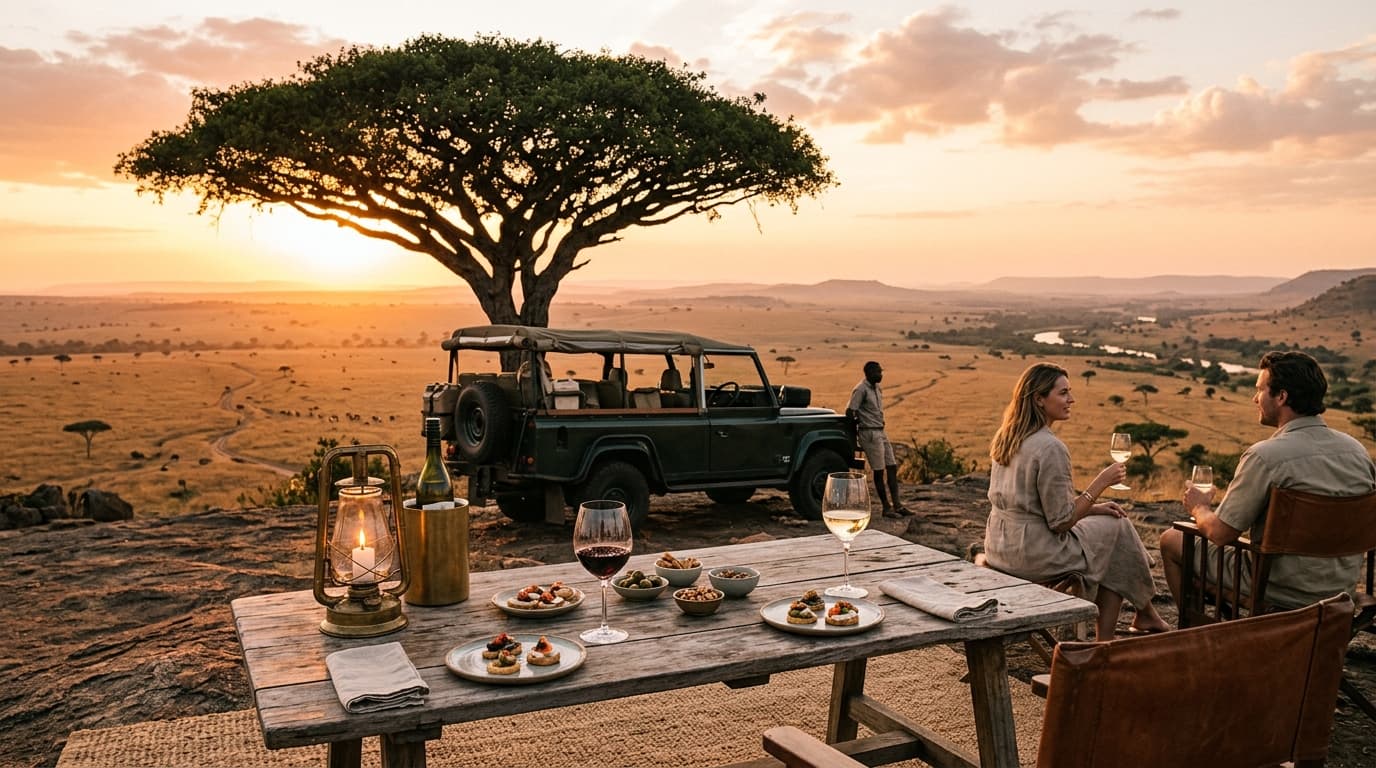
No safari day is complete without the iconic bush sundowner. Parking vehicles at Sunset Ridge Lookout as dusk settles allows guests to stretch their legs, sample craft cocktails, and watch the sun dip below the horizon. If your wilderness excursion is part of a broader corporate getaway, balance your outdoor activities by referencing a board meeting timeline template for structured morning strategy sessions before game drives.
Evening Boma Dinner and Stargazing
| Time | Event |
|---|---|
| 20:00 | Traditional Boma Dinner |
| 21:30 | Stargazing and Storytelling |
Nightfall in the African bush brings an entirely new sensory atmosphere. Gathering guests in the outdoor boma area around a central bonfire combines traditional grilled cuisine with authentic regional hospitality, creating a cozy social center after a full day in open vehicles.
Concluding the night around the campfire circle gives guides an opportunity to share local folklore, interpret animal calls echoing in the dark, and identify southern hemisphere constellations. For travelers planning multi-day destination events, you can explore our baby shower timeline template or birthday party timeline template to organize special milestone moments into your broader tour schedule.
Safari Trip Plan vs Safari Itinerary
While travelers often use these terms interchangeably, a safari trip plan serves a distinct operational purpose compared to a standard tour itinerary:
| Feature | Safari Trip Plan | Safari Itinerary |
|---|---|---|
| Primary Focus | Hourly master execution for lodge operations, drivers, and guides | Broad overview of destinations, flights, and multi-day lodging |
| Target Audience | Head rangers, camp managers, private drivers, and active guests | Travel agents, booking guests, and tour operators |
| Detail Level | Precise departure times, briefing locations, and activity handoffs | Dates, hotel names, flight numbers, and general daily highlights |
| Flexibility | Adjusted dynamically based on daily weather and animal movements | Fixed booking documentation for travel confirmation |
A tour itinerary tells guests where they will sleep on Tuesday; a safari trip plan ensures the 4x4 vehicle is fueled, the ranger briefing is complete, and high tea is served on time.
Who Should Use This Template?
This master schedule is tailored for professionals and private travelers managing structured wilderness trips:
- Safari Lodge Managers & Camp Hosts: Standardize daily guest flows, kitchen meal call times, and housekeeping schedules.
- Head Rangers & Wilderness Guides: Coordinate vehicle departure windows, safety briefings, and sundowner logistics.
- Private Tour Operators & Travel Agents: Provide clients with detailed day-by-day expectations for luxury or budget safari packages.
- Corporate Event Planners: Structure executive retreats that balance strategic meetings with outdoor excursions.
- Group Trip Leaders & Families: Maintain group punctuality across flight transfers, meal times, and wildlife drives.
Chronolio offers dedicated support tailored to distinct administrative roles, ensuring managers, field staff, and guests stay aligned on every update.
How to Use This Template
- Duplicate or Edit: Click the edit button on this page to load this safari schedule directly into your Chronolio workspace.
- Adjust Flight & Reserve Timing: Modify arrival airstrip times and game drive lengths to match your specific national park or game reserve rules.
- Customize Meal Protocols: Update high tea, lunch, and boma dinner schedules based on your camp's culinary capabilities.
- Export & Print: Download clean formatted copies in PDF or Word formats for distribution to guides, lodge staff, and drivers.
- Share with Guests: Provide digital or printed copies to travelers upon arrival so they understand daily meeting points and dress codes.
Tips for a Successful Safari Day
- Respect Early Departures: The best wildlife sightings occur in the first hour of daylight; encourage guests to pack gear the night before.
- Enforce Layered Clothing Rules: Mornings in open 4x4 vehicles are chilly, while afternoons are hot. Advise guests to dress in breathable, neutral layers.
- Prioritize Water & Hydration: Dust and sun exposure dehydrate travelers quickly; ensure every vehicle carries fresh water containers.
- Maintain Communication Between Trackers: Use short-wave radios to alert neighboring vehicles of rare animal sightings without crowding animals.
- Enforce Strict Bush Safety: Never allow guests to disembark vehicles outside designated sundowner spots without ranger clearance.
- Protect Midday Rest Windows: Avoid scheduling heavy physical activities during peak midday heat to keep guest energy high for evening drives.
Common Mistakes to Avoid
- Over-Scheduling the Midday: Attempting full afternoon game drives during peak sun results in tired guests and empty animal tracks.
- Skipping Mandatory Safety Briefings: Assuming experienced travelers know bush protocols leads to unsafe behavior around wild animals. Learn more about wildlife conservation and visitor safety standards through the African Wildlife Foundation.
- Ignoring Travel Buffers Between Airstrips: Light aircraft charters frequently adjust landing windows due to weather; build 30-minute buffers into airport transfers.
- Neglecting Dietary Requirements: Tented camps are far from urban grocery stores; confirm guest dietary restrictions days before bush flight arrivals.
- Forgetting Backup Lighting: Bush camps dim lights early; advise guests to carry torches or headlamps between the boma and their suites.
In Summary
- A safari trip plan synchronizes flight transfers, ranger briefings, game drives, and camp hospitality around natural animal movement.
- Early morning and late afternoon game drives optimize wildlife sightings while avoiding extreme midday heat.
- Midday hours are reserved for dining, relaxation, and resting in private camp facilities.
- Bush sundowners and boma dinners provide structured, memorable social experiences at dusk.
- Using a customizable Chronolio template keeps field guides, lodge staff, and guests aligned throughout the expedition.
Planning a seamless African wildlife expedition requires balancing flight logistics, field tracking, and camp hospitality into one harmonious daily rhythm. Whether you are managing an exclusive luxury tented camp, leading a private photo safari, or organizing a corporate bush getaway, using an established safari trip plan guarantees your guests experience the best wildlife sightings while enjoying world-class bush hospitality. Customize your schedule today and keep every game drive running smoothly.
Customize Your Safari Trip Plan