






This Template at a Glance
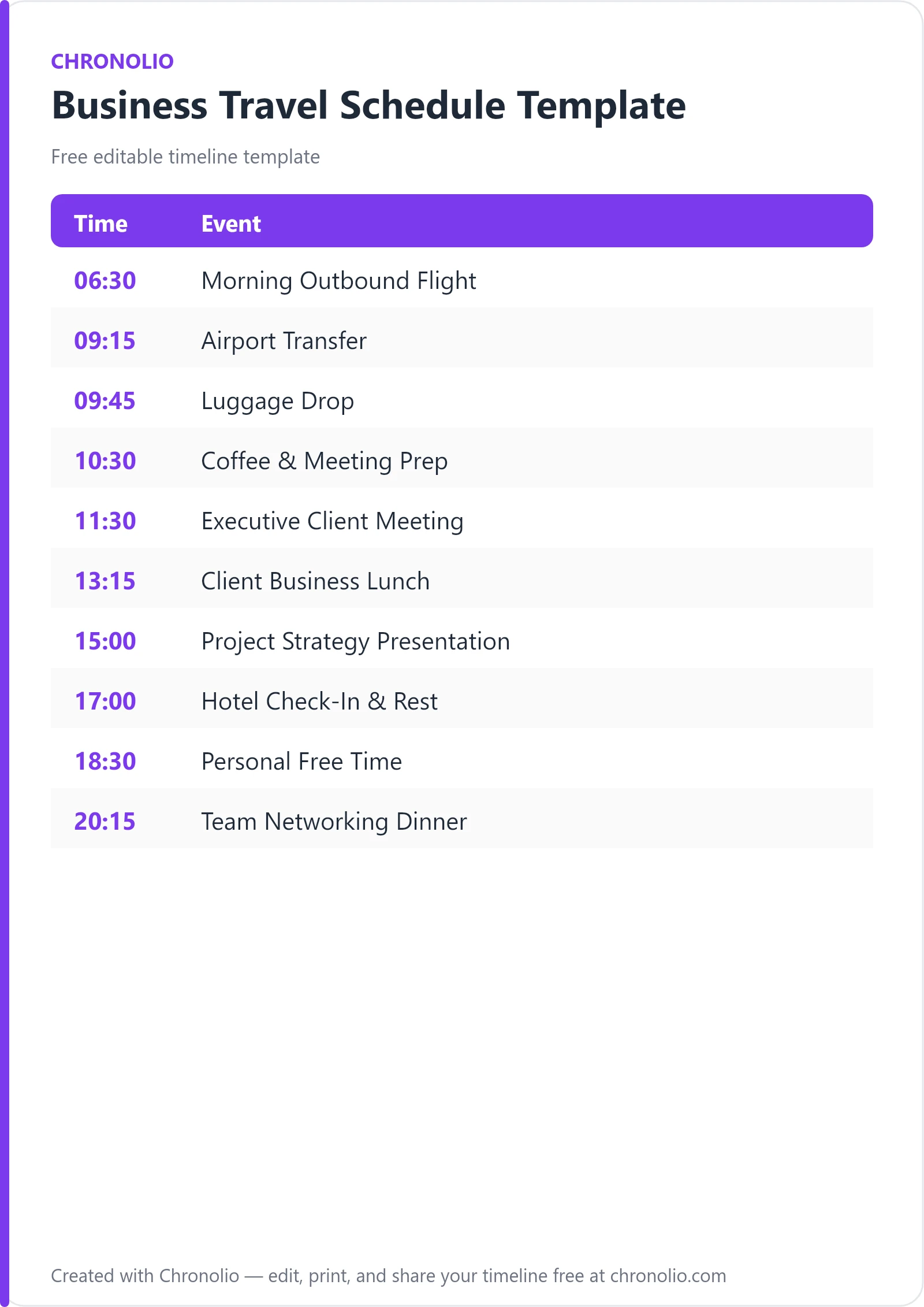
Here is the complete schedule this free template gives you — every time block, ready to edit, download, and share:
| Time | Event |
|---|---|
| 06:30 | Morning Outbound Flight |
| 09:15 | Airport Transfer |
| 09:45 | Luggage Drop |
| 10:30 | Coffee & Meeting Prep |
| 11:30 | Executive Client Meeting |
| 13:15 | Client Business Lunch |
| 15:00 | Project Strategy Presentation |
| 17:00 | Hotel Check-In & Rest |
| 18:30 | Personal Free Time |
| 20:15 | Team Networking Dinner |
What Is a Business Travel Schedule?
A business travel schedule is a comprehensive, time-sequenced agenda that maps out every travel logistics event and professional engagement during a corporate trip. Unlike a simple flight confirmation receipt, this dedicated master schedule synchronizes transit windows, luggage management, pre-meeting prep, formal client pitch sessions, executive dining, and critical downtime into one seamless timeline.
In my years managing executive logistics, I have seen brilliant pitch presentations fall apart simply because a transfer shuttle got stuck in urban traffic or a team arrived at corporate headquarters exhausted with zero time to review their slides. This template reflects real-world corporate travel workflows and industry best practices, ensuring that every hour of your trip is optimized for professional performance while safeguarding necessary personal rest. Whether you are traveling for sales meetings or strategic reviews, pairing your travel itinerary with our board meeting timeline template or event planning templates guarantees that every stakeholder stays synchronized.
Create Your Business Travel Schedule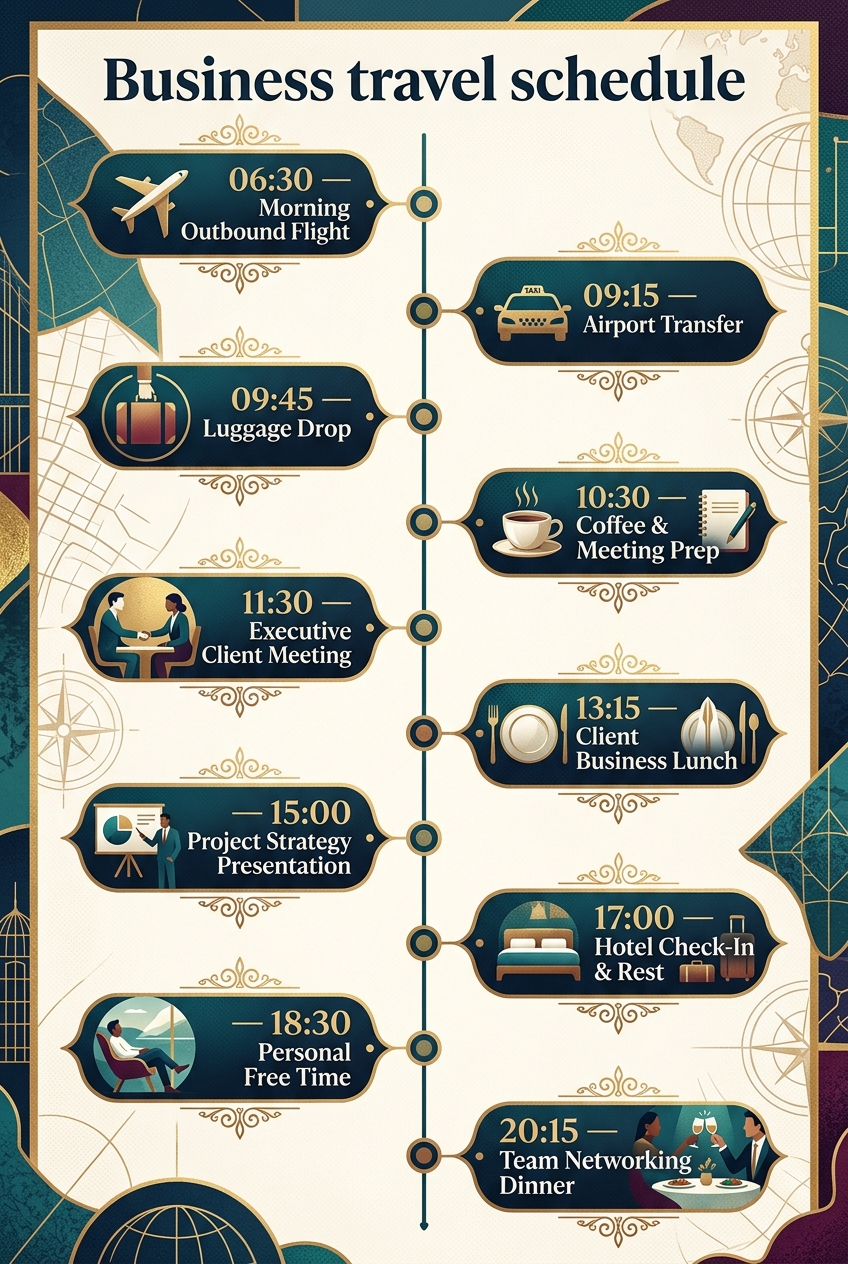
Why Business Trips Need a Schedule
Executing a successful business trip requires far more than booking a ticket and showing up at the gate. Without a unified time management plan, professionals frequently encounter missed connections, rushed prep sessions, and mental fatigue that hinders executive performance.
- Prevents Transit Friction and Delays: By establishing clear transition markers for airport shuttles and hotel luggage drop-offs, you eliminate unnecessary travel anxiety and protect critical meeting start times.
- Maximizes Meeting Readiness: Dedicated prep blocks built into the flow give travelers time to review pitch decks and align priorities before stepping into high-stakes environments.
- Protects Physical and Mental Energy: High-performing business trips require balance; incorporating structured breaks and check-in windows prevents traveler burnout and ensures peak mental clarity during evening networking.
What to Include in a Business Travel Schedule
- Flight and Terminal Details: Exact departure times, terminal locations, and gate assignments for outbound and return legs.
- Ground Transportation Windows: Dedicated time blocks for executive shuttles, taxis, or ride-shares between airports, hotels, and venues.
- Baggage Logistics: Strategic drops at concierge desks when meeting schedules precede standard hotel check-in hours.
- Prep and Buffer Windows: Protected 30- to 45-minute blocks at local cafes or hotel lobbies to review presentation slides.
- Core Business Engagements: Clear start times, locations, and boardroom numbers for meetings, luncheons, and presentations.
- Hotel Check-in and Downtime: Scheduled gaps to unpack, clear email backlogs, and rest before evening events.
- Networking Events: Formal dinners or casual post-work drinks reserved for building client and team relationships.
Morning Transit and Meeting Preparation
| Time | Event |
|---|---|
| 06:30 | Morning Outbound Flight |
| 09:15 | Airport Transfer |
| 09:45 | Luggage Drop |
| 10:30 | Coffee & Meeting Prep |
The early morning hours set the tone for your entire business trip. Boarding an early morning flight allows you to reach your destination city with enough day ahead to execute major meetings, but it requires strict discipline around travel buffers. Utilizing in-flight time to review key presentation points ensures you arrive mentally engaged rather than distracted by last-minute deck tweaks.
+-------------------------------------------------------------------+ | MORNING FLOW: Flight -> Shuttle Transfer -> Concierge -> Prep | +-------------------------------------------------------------------+
Upon landing at JFK Airport, moving directly to an executive shuttle stand minimizes ground transit delays into Midtown. Because official hotel check-in rarely opens before mid-afternoon, dropping your travel bags with the hotel concierge desk at The Grand Hyatt Concierge Desk keeps you agile. Taking 45 minutes at a nearby venue like Artisan Roasters Cafe provides a quiet environment to grab caffeine, connect to local Wi-Fi, and complete a final run-through of your agenda points before stepping into client headquarters.
Midday Client Engagement and Strategy
| Time | Event |
|---|---|
| 11:30 | Executive Client Meeting |
| 13:15 | Client Business Lunch |
| 15:00 | Project Strategy Presentation |
The middle section of the business travel schedule focuses on core revenue-generating actions. Arriving at Corporate HQ, Boardroom A at 11:30 guarantees a punctual start for contract negotiations and Q3 performance reviews. Building in an hour and a half for this primary meeting gives all stakeholders ample breathing room to address complex contract terms without feeling rushed.
Following the initial boardroom session, transitioning to The Oak Room Bistro for a structured client business lunch shifts the dynamic from formal negotiation to relationship building. Executive travel guidelines from organizations like the Global Business Travel Association emphasize that informal dining settings often yield deeper alignment than closed-door meetings. After lunch, returning to Corporate HQ, Main Auditorium for a formal proposal presentation allows department leads and technical experts to evaluate your solution while energy remains high.
Afternoon Recovery and Evening Networking
| Time | Event |
|---|---|
| 17:00 | Hotel Check-In & Rest |
| 18:30 | Personal Free Time |
| 20:15 | Team Networking Dinner |
After hours of intense client interactions and public speaking, energy reserves naturally drop. The late afternoon period is specifically structured to give travelers room to recover. Checking into your hotel room at The Grand Hyatt Front Desk, unpacking your suit, and spending 90 minutes catching up on critical emails or simply resting prevents compounding fatigue.
+-------------------------------------------------------------------+ | EVENING FLOW: Unpack & Rest -> Exploration -> Team Dinner | +-------------------------------------------------------------------+
Allowing an hour and a half of personal downtime in the Downtown Cultural District gives traveling professionals time to step away from work, explore the city, or exercise. Just as personal milestones benefit from structured schedules—like a birthday party timeline template or an anniversary party schedule template—corporate trips require intentional pacing. Closing the day with a relaxed team dinner at Skyline Grill & Bar builds morale and allows local team members to celebrate successful client pitch presentations together.
Business Travel Schedule vs Travel Itinerary
Travelers frequently confuse a operational travel schedule with a basic travel itinerary. Understanding the operational distinction ensures your trip runs smoothly without logistical bottlenecks.
| Feature | Business Travel Schedule | Standard Travel Itinerary |
|---|---|---|
| Primary Focus | Executive time management and performance flow | Flight numbers, booking codes, and reservation tracking |
| Time Granularity | Detailed block-by-block breakdown including buffers | Broad start times for transit and hotel check-in |
| Meeting Preparation | Expressly accounts for review time and prep slots | Ignored or assumed to happen outside the schedule |
| Buffer Periods | Includes explicit margins for urban traffic and delays | Zero operational buffer accounted for |
| Downtime Planning | Scheduled rest windows to protect traveler mental health | Omitted entirely |
While a traditional itinerary acts as a passive list of reservations, a business travel schedule acts as an active management tool that keeps you punctual, focused, and refreshed across every phase of your journey.
Who Should Use This Template?
This business travel schedule is tailored for professionals, executives, and support staff who need reliable, repeatable trip structure across various corporate sectors:
- Executive Assistants & Chiefs of Staff: To coordinate complex C-suite travel arrangements and keep leaders on schedule.
- Corporate Travel Managers: To standardize trip structures and ensure traveling employees adhere to company travel policies.
- Sales Directors & Account Executives: Managing multi-stop regional sales pitches, client luncheons, and closing meetings.
- Management Consultants & Auditors: Traveling to client job sites for intensive week-long discovery sessions and strategy workshops.
- Corporate Event & Venue Coordinators: Supporting visiting speakers and executive guests during company summits.
Chronolio offers adaptable workspace views for different business roles, making it simple for coordinators to share view-only or editable timelines with traveling teams.
How to Use This Template
- Download or Duplicate: Open this template directly in Chronolio or download the editable versions using our Word document template or printable PDF template.
- Input Travel Details: Update flight numbers, hotel names, address details, and specific boardroom locations.
- Adjust Timing Buffers: Modify airport transfer windows and travel times based on regional traffic patterns and peak transit hours.
- Distribute to Stakeholders: Share the finalized link or printout with your executive, administrative team, and host site contacts.
Tips for a Successful Business Travel Schedule
- Build 30% Extra Buffer Time: Urban rush hour traffic and airport security screening lines are unpredictable; always add extra cushion to ground transit blocks.
- Pack a Mobile Office Kit: Keep portable chargers, adapter cords, and physical copies of presentation decks easily accessible in your carry-on luggage.
- Confirm Room Key Policies Early: Call your hotel concierge in advance to confirm whether early check-in or secure luggage storage is available upon morning arrival.
- Sync Destinations to Offline Maps: Download city maps on your mobile device before departing so you can navigate between client offices seamlessly without relying on spotty cellular coverage.
- Schedule Post-Trip Recovery: Avoid scheduling high-stakes internal meetings the morning after a late evening return flight to protect long-term team productivity.
Common Mistakes to Avoid
- Booking Back-to-Back Engagements: Scheduling a high-level client meeting 15 minutes after scheduled flight landing leaves zero margin for gate holds or baggage claim delays.
- Neglecting Preparation Windows: Assuming you can review complex pitch decks while navigating airport shuttles leads to fragmented focus and poor presentation delivery.
- Forgetting Time Zone Offset Adjustments: Failing to update meeting invites to local destination times can lead to missed board presentations or late arrivals.
- Over-Scheduling Evening Dinners: Stacking high-intensity formal client dinners every night without personal downtime rapidly leads to traveler burnout.
- Ignoring Hotel Check-In Timing: Arriving at a hotel mid-morning expecting an open room without arranging prior concierge luggage drop-off creates unnecessary stress.
In Summary
- Complete Single-Day Blueprint: Organizes everything from morning flights and client presentations to hotel check-ins and evening networking.
- Built-In Buffer Zones: Incorporates crucial prep times, transit margins, and recovery breaks to optimize traveler performance.
- Designed for Corporate Standards: Ideal for executives, sales teams, consultants, and administrative support personnel.
- Fully Customizable: Easily tailored for single-day trips or expanded across multi-day regional travel itineraries.
- Exportable Formats: Available for instant digital customization or offline access via printable formats.
Whether you are managing complex corporate itineraries, setting up a board meeting timeline template for company directors, or organizing social milestones like a baby shower timeline template or Christian wedding timeline, having an organized, realistic timeline is key to flawless execution. Customize your schedule today to ensure your next business trip runs smoothly from takeoff to landing.
Create Your Business Travel Schedule