





This Template at a Glance
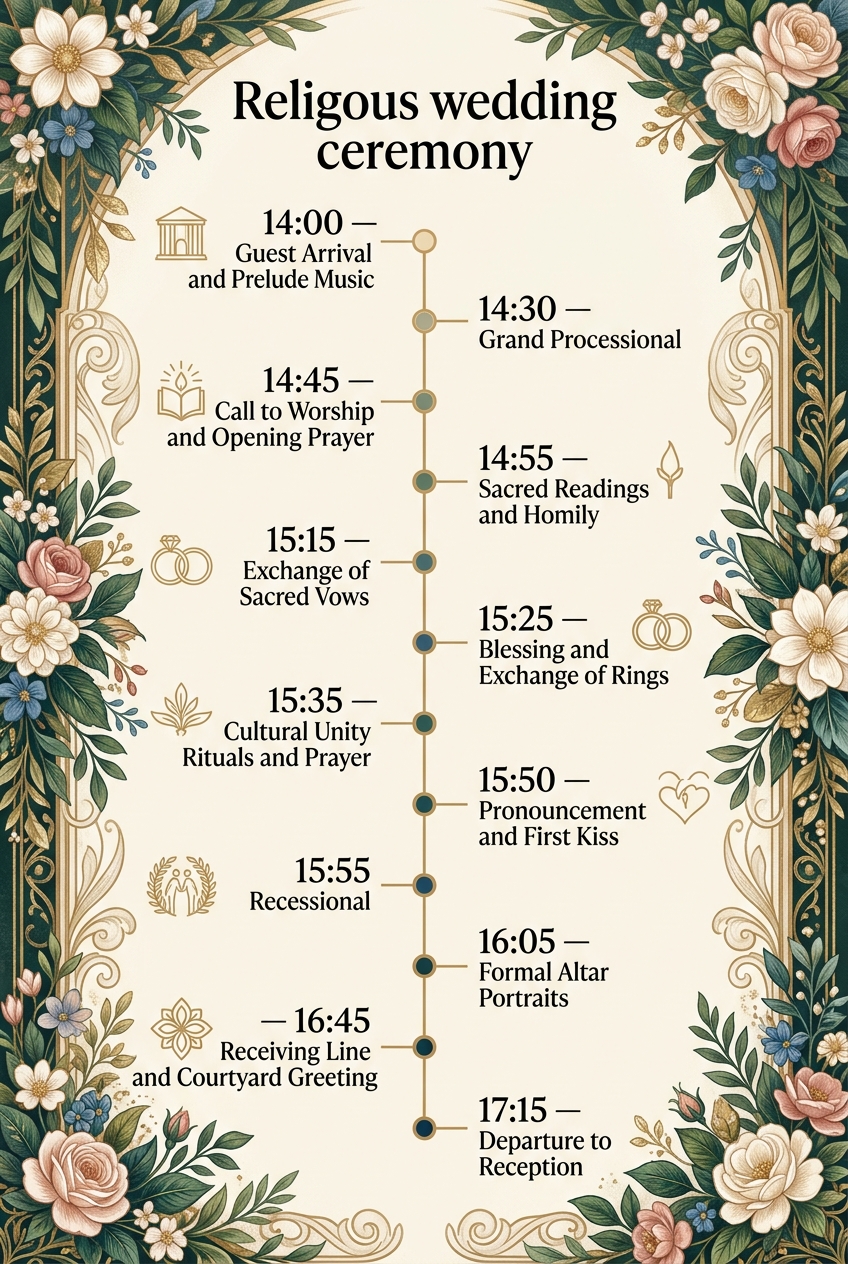
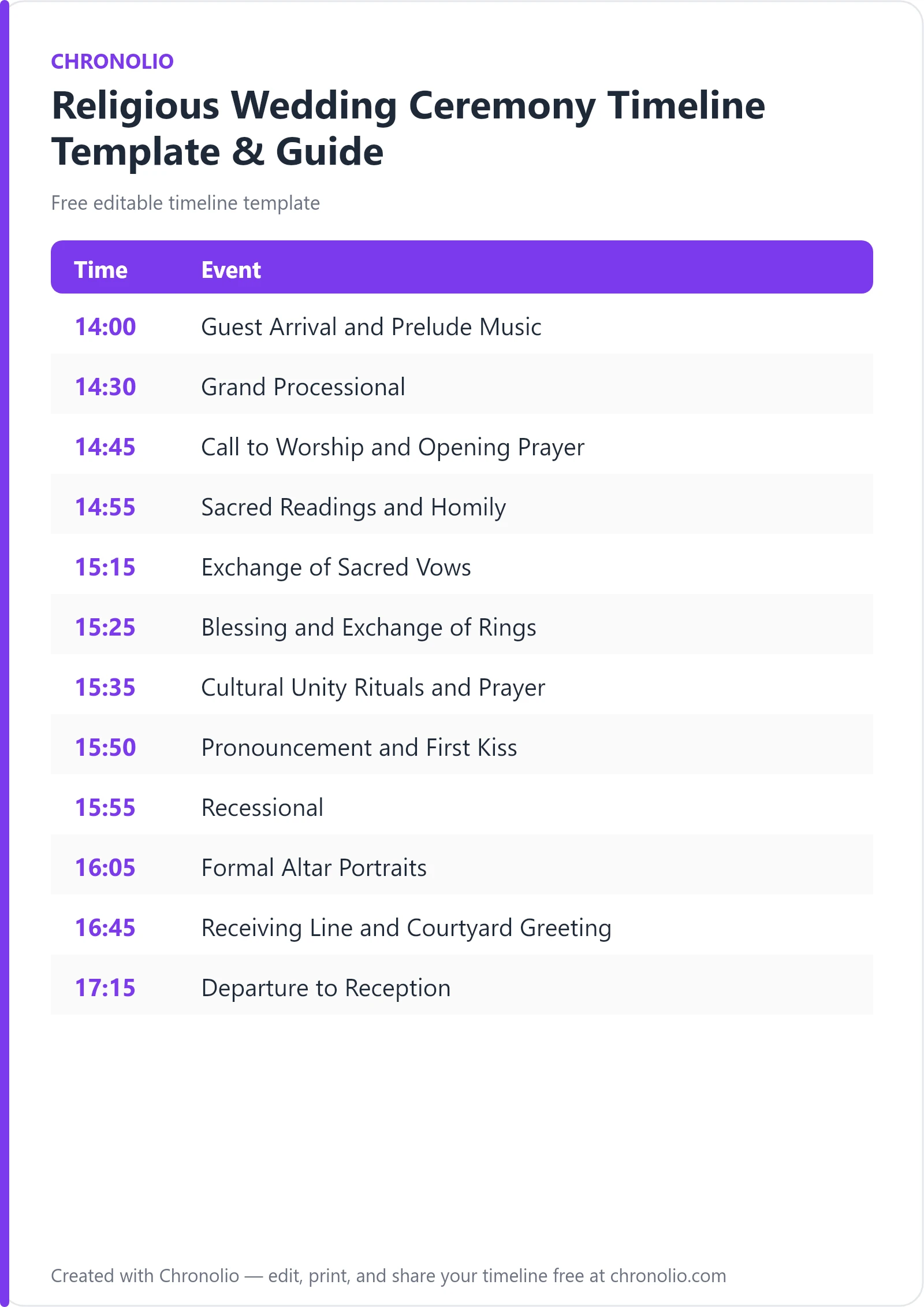
Here is the complete schedule this free template gives you — every time block, ready to edit, download, and share:
| Time | Event |
|---|---|
| 14:00 | Guest Arrival and Prelude Music |
| 14:30 | Grand Processional |
| 14:45 | Call to Worship and Opening Prayer |
| 14:55 | Sacred Readings and Homily |
| 15:15 | Exchange of Sacred Vows |
| 15:25 | Blessing and Exchange of Rings |
| 15:35 | Cultural Unity Rituals and Prayer |
| 15:50 | Pronouncement and First Kiss |
| 15:55 | Recessional |
| 16:05 | Formal Altar Portraits |
| 16:45 | Receiving Line and Courtyard Greeting |
| 17:15 | Departure to Reception |
What Is a Religious Wedding Ceremony Timeline?
A religious wedding ceremony timeline is a synchronized, chronological schedule that aligns house-of-worship requirements, liturgical rites, musical cues, and photo sessions into a harmonious order of events. Having overseen dozens of sanctuary services, I can tell you that houses of worship operate under strict facility windows, organist schedules, and clerical commitments. A well-planned timeline ensures that spiritual traditions and formal customs flow naturally without feeling rushed or chaotic.
This detailed agenda reflects time-tested practices from cathedral directors, ministers, and professional event planners. Whether your service takes place in a grand basilica, a historic church, or a suburban chapel, this operational framework helps clergy, musicians, photographers, and extended family members remain completely synchronized from the moment the sanctuary doors open until the final vehicle leaves the courtyard.
Customize Your Religious Wedding Ceremony Timeline
Why Religious Wedding Ceremonies Need a Timeline
Houses of worship present unique logistical demands that differ significantly from secular event venues. Sacred spaces often host back-to-back services, weekend worship, or multiple weddings in a single afternoon. Strict cathedral schedules require precise coordination to respect sacred spaces and ensure your bridal party never encounters another wedding party in the nave.
Beyond facility limits, a clear itinerary protects the solemnity of your vows. When musicians know their exact processional cues, readers understand when to approach the ambo, and photographers have a dedicated window for altar portraits, the entire congregation relaxes into a reverent, joyful atmosphere.
Finally, your guests benefit immensely from a predictable flow. Older family members appreciate knowing when seating begins, while out-of-town visitors benefit from clear timing that helps them navigate the transition between the sanctuary service and the evening reception.
What to Include in a Religious Wedding Ceremony Timeline
A comprehensive sacred wedding schedule accounts for every logistical milestone before, during, and immediately after the worship service. When drafting your schedule, ensure you account for these core elements:
- Prelude Music & Guest Seating: A 30-minute window with organ or string arrangements while ushers escort guests to their pews.
- The Grand Processional: The ceremonial entrance of clergy, groom, groomsmen, bridesmaids, flower girls, ring bearers, and the bride.
- The Sacred Liturgy: Welcome remarks, opening invocations, selected holy scripture readings, and an inspirational homily or sermon.
- Sacred Vows & Ring Exchange: The solemn exchange of wedding promises and the blessing of wedding bands at the main altar.
- Cultural & Unity Rituals: Symbolic customs such as lighting a unity candle, placing a ceremonial veil and cord, or offering prayers of blessing.
- The Recessional: The official pronouncement, celebratory first kiss, and triumphant exit down the center aisle.
- Post-Ceremony Photography: Dedicated time inside the sanctuary for formal family and bridal party altar portraits.
- Courtyard Receiving Line: A designated period for newlyweds to greet guests and receive personal blessings before traveling to the reception venue.
Prelude and the Grand Processional
| Time | Event | | 14:00 | Guest Arrival and Prelude Music | | 14:30 | Grand Processional |
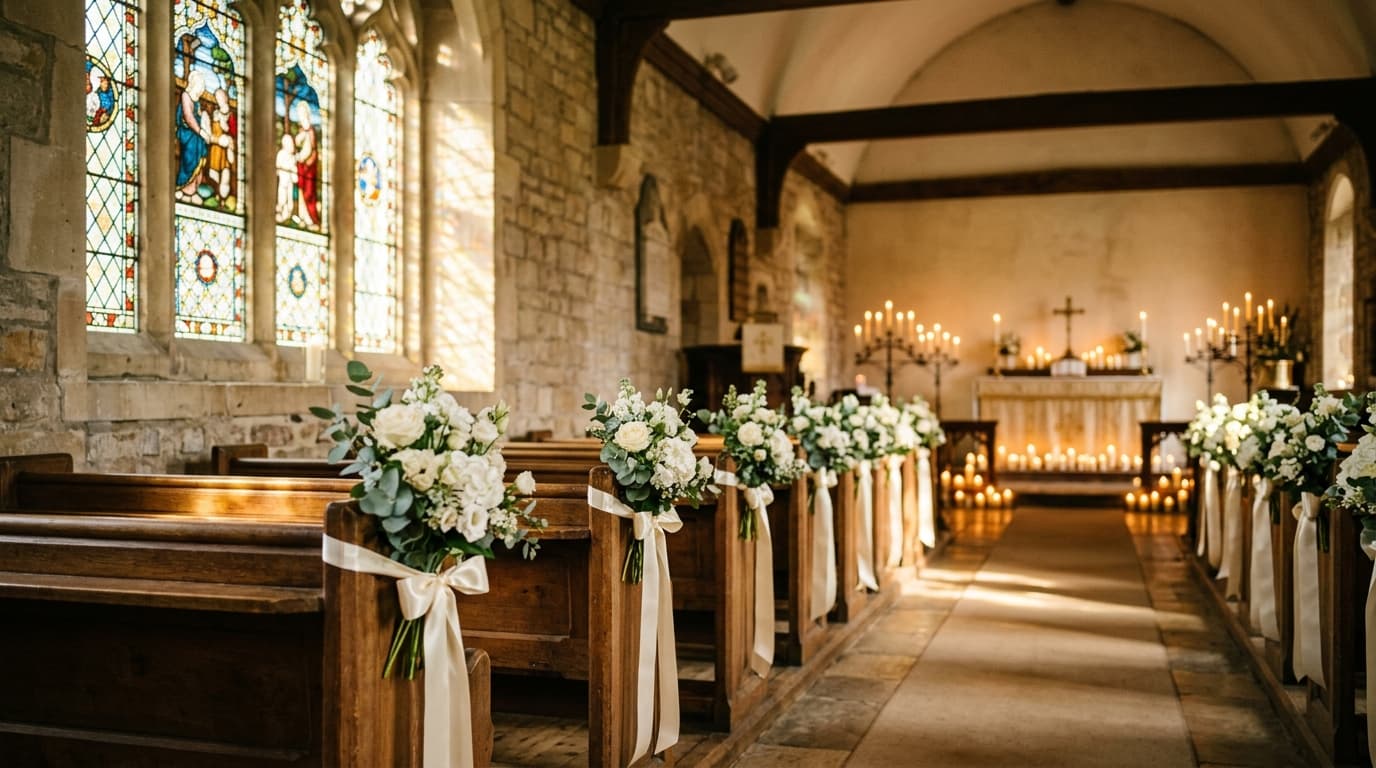
The hour before the bride walks down the aisle establishes the spiritual and emotional tone for the entire service. Opening the sanctuary doors at 14:00 gives guests ample time to arrive, park, and be comfortably seated by ushers. During this half-hour window, classical organists and string ensembles set a peaceful, sacred mood with curated prelude selections.
At 14:30 sharp, the sanctuary doors close briefly to signal the start of the grand processional. The officiant and groom take their places at the main altar, followed by the wedding party entering in traditional sequence. The grand processional culminates as the bride walks down the central aisle, accompanied by majestic bridal entrance music. Allocating a full 15 minutes prevents any sense of hurry and allows your photographer to capture every emotional arrival.
Sacred Liturgy, Homily, and Vow Exchange
| Time | Event | | 14:45 | Call to Worship and Opening Prayer | | 14:55 | Sacred Readings and Homily | | 15:15 | Exchange of Sacred Vows | | 15:25 | Blessing and Exchange of Rings |
Once the bridal party is assembled at the main altar, the officiant leads the call to worship and opening invocation prayer blessing the sacred union. This opening segment anchors the ceremony in faith and welcomes the congregation into active participation.
Following the prayer, designated family members step forward to read chosen religious scriptures. The officiant then delivers a brief homily focusing on divine love, commitment, and spiritual partnership. If your service follows a specific denomination, you can easily adapt these elements; for instance, compare this flow with our specialized Catholic Wedding Timeline or our broader Christian Wedding Timeline to see how liturgical nuances alter the duration.
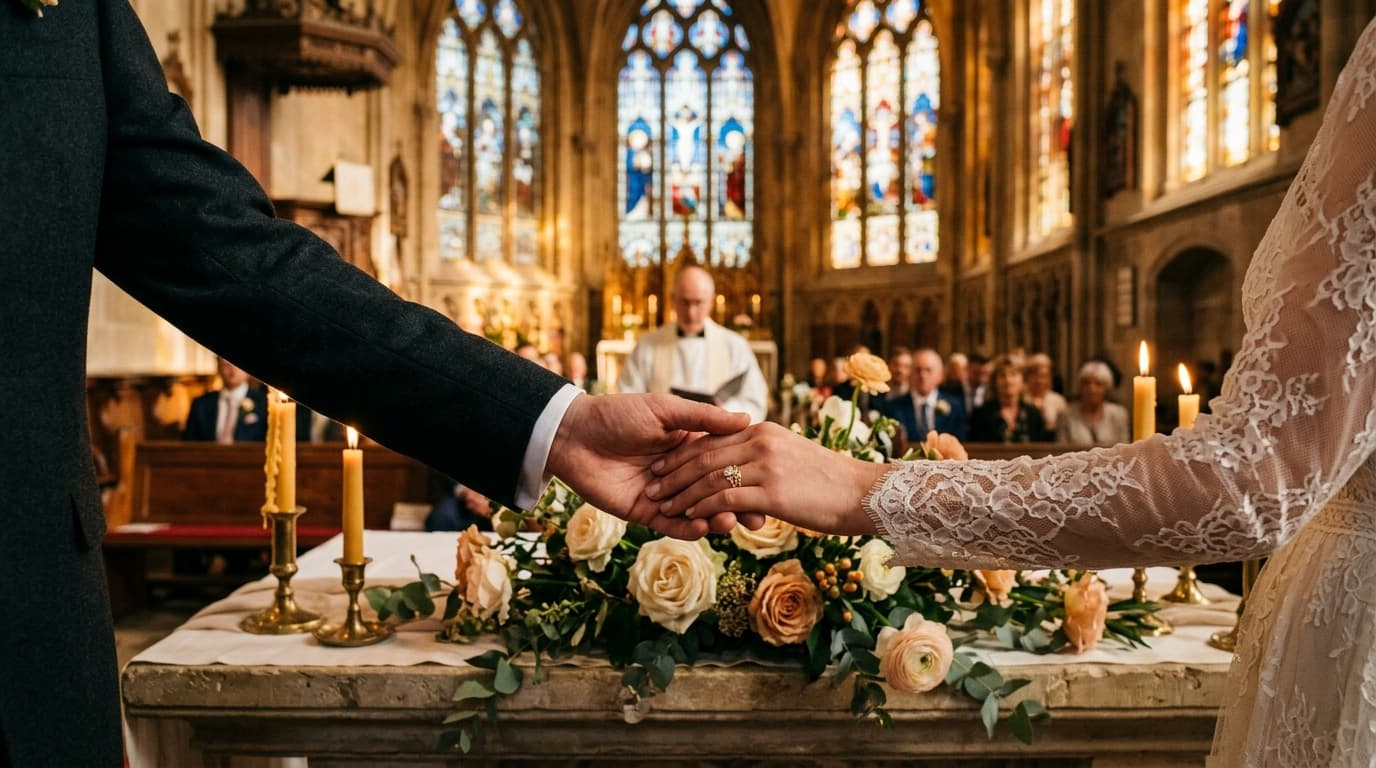
At 15:15, the heart of the service takes place: the exchange of sacred vows. Before God and the assembled witnesses, the couple pledges lifelong fidelity. The officiant then blesses the wedding bands at the altar, and the newlyweds place the rings on each other's fingers as tangible symbols of their eternal covenant.
Cultural Traditions and the Recessional
| Time | Event | | 15:35 | Cultural Unity Rituals and Prayer | | 15:50 | Pronouncement and First Kiss | | 15:55 | Recessional |
Many religious traditions weave rich cultural customs into the matrimonial service. Starting at 15:35, the couple may light a unity candle, participate in a ceremonial veil and cord blessing, or take part in traditional prayers of dedication. Placing these rituals immediately after the ring exchange highlights the merging of faith, culture, and family heritage into a single cohesive story.
At 15:50, the officiant delivers the official pronouncement, presenting the couple to the congregation for their joyful first kiss as husband and wife. The grand recessional begins immediately at 15:55, with the newlyweds leading their bridal party down the sanctuary aisle to triumphant, celebratory postlude music while guests applaud.
Altar Portraits and Guest Receiving Line
| Time | Event | | 16:05 | Formal Altar Portraits | | 16:45 | Receiving Line and Courtyard Greeting | | 17:15 | Departure to Reception |
Once the recessional completes, the couple and key family members immediately return to the main altar for formal portraits. Keeping guests in the pews or directing them toward the church courtyard ensures the sanctuary remains quiet for structured photography. Having a pre-printed photographer shot list prevents delay during this 40-minute window.
At 16:45, the newlyweds step out into the cathedral courtyard to hold a traditional receiving line. This provides a warm, organized way for guests to offer congratulations and personal blessings. Finally, at 17:15, the couple makes their grand departure from the cathedral steps, boarding their transportation to head toward the evening reception venue. Later in life, couples often revisit these cherished memories during landmark celebrations using an Anniversary Party Schedule Template.
Religious Wedding Ceremony Timeline vs Secular Ceremony Agenda
While both religious and secular wedding agendas aim to keep a wedding day organized, their structures, rules, and pacing differ significantly. Understanding these distinction helps couples set realistic expectations with their vendor teams.
| Operational Aspect | Religious Wedding Ceremony Timeline | Secular Ceremony Agenda |
|---|---|---|
| Primary Focus | Liturgical rites, sacred vows, scripture, and cultural blessings | Personalized stories, custom vows, and brief readings |
| Duration | 45 to 90 minutes (plus altar photos & receiving line) | 20 to 30 minutes total |
| Venue Rules | Strict sanctuary curfews, flash photography limits, music rules | Flexible vendor policies and customizable layouts |
| Post-Service Customs | Formal altar portraits and outdoor receiving lines | Direct transition into cocktail hour |
| Musical Cues | Traditional pipe organ, classical strings, sacred choir | Modern acoustic, pop arrangements, or DJ playback |
A secular ceremony offers complete freedom over length and content, whereas a religious wedding ceremony adheres to established spiritual protocols and facility guidelines. Sanctuary timelines must account for clergy prep time, organist contracts, and strict altar clearance deadlines that secular outdoor venues rarely impose.
Who Should Use This Template?
This timeline template is designed for anyone coordinating a faith-based matrimonial service in a sacred setting. Different roles involved in executing a seamless event rely on this schedule:
- Bride and Groom: Couples seeking a traditional, stress-free order of events that honors their faith and heritage.
- Clergy & Officiants: Ministers, priests, and religious leaders needing a reliable liturgy timeline for sanctuary planning.
- House-of-Worship Coordinators: Church venue managers handling back-to-back weekend services and facility scheduling.
- Wedding Planners & Directors: Professional coordinators managing vendor arrival, musical cues, and photo timing.
- Musicians & Vocalists: Organists, string quartets, and choir directors who require precise song timing for prelude, processional, and recessional cues.
- Photographers & Videographers: Media teams needing dedicated lighting windows and structured altar portrait schedules.
How to Use This Template
- Download or Customize Online: Click the edit button on this page to open the template in Chronolio, or download the printable Word document or PDF guide.
- Confirm Sanctuary Time Slots: Verify your venue access window with your house-of-worship coordinator to ensure your start and end times align with church policies.
- Consult Your Officiant: Review the liturgical order of events with your officiating clergy member to incorporate specific prayers, readings, or sacrament requirements.
- Distribute to Your Vendor Team: Provide the finalized running order to your photographer, musicians, transportation drivers, and wedding party at least two weeks prior to the wedding date.
Tips for a Successful Religious Wedding Ceremony
- Confirm House-of-Worship Media Rules: Many traditional churches restrict flash photography or require videographers to remain behind specific sanctuary boundaries. Review these rules with your media team during the walkthrough.
- Prepare Family for Altar Portraits: Give immediate family members a written schedule showing when and where to gather after the recessional so no time is lost hunting down relative groups.
- Buffer Your Prelude Music: Have your organist or string ensemble prepare an extra 10 minutes of prelude music in case late-arriving guests or traffic delays push back the processional start time.
- Provide Printed Programs: Help guests follow along with religious responses, hymn lyrics, and cultural traditions by providing a printed order of service at the sanctuary entrance.
- Designate an Usher Lead: Assign an experienced usher to manage row-by-row seating, ensuring front pews reserved for immediate family remain open until the processional starts.
- Plan Courtyard Logistics: If holding a receiving line, ensure cathedral staff set up water stations nearby, especially for outdoor summer greetings. Many years down the road, as families grow, you may find yourself adapting these same hosting skills using a Baby Shower Timeline Template.
Common Mistakes to Avoid
- Underestimating Guest Parking Time: Cathedral and downtown church parking lots often bottleneck. Failing to advise guests to arrive 30 minutes early leads to late arrivals walking down the aisle during the processional.
- Forgetting Sanctuary Curfews: Houses of worship frequently host evening mass, Saturday confessions, or secondary weddings. Overstaying your photo window can result in facility fines or interrupted portrait sessions.
- Omitting the Receiving Line Buffer: Greeting 150 guests takes at least 30 minutes. Skipping this allocation on your schedule will push back your cocktail hour and reception start time.
- Not Briefing Scriptural Readers: Lectors who do not practice at the ambo microphone beforehand may struggle with sound projection or miss their entry cues during the liturgy.
- Ignoring Seasonal Temperature Factors: Historic chapels and large stone cathedrals can be remarkably cold in winter and hot in summer. Plan your attire, robes, and bridal prep comfortably around venue climate control.
In Summary
- A religious wedding ceremony timeline coordinates spiritual liturgy, musical cues, family processionals, and photography across a 3.5-hour sanctuary window.
- The schedule accounts for prelude seating, scriptural readings, clergy homilies, vow exchanges, ring blessings, and cultural unity customs.
- Dedicated post-service blocks ensure stress-free altar portraits and courtyard receiving lines without violating church departure deadlines.
- Clear timing keeps officiants, church coordinators, musicians, photographers, and wedding parties perfectly synchronized.
- Chronolio templates can be fully customized and exported in Word and PDF formats for effortless distribution to your wedding team.
A well-structured religious wedding ceremony preserves the sanctity and joy of your marriage celebration while keeping family, clergy, and vendors working in perfect unison. Whether you are hosting an intimate chapel service or a grand cathedral nuptial, this template ensures your focus remains entirely on your sacred vows.
Customize Your Religious Wedding Ceremony TimelineFor broader liturgical guidance and denominational resources, consult authoritative bridal resources like Brides.com's Traditional Ceremony Guide for additional ritual planning insights.