







This Template at a Glance
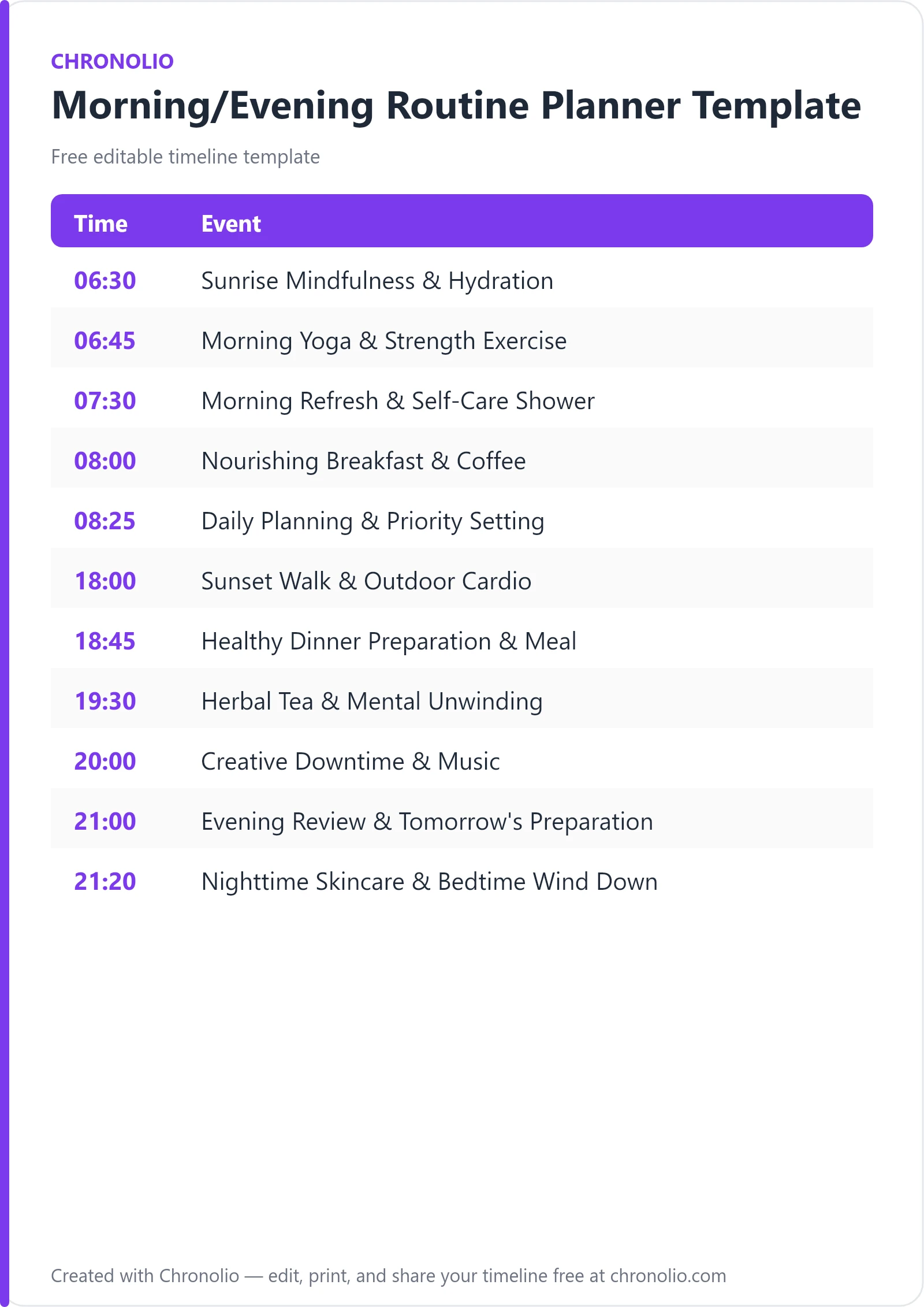
Here is the complete schedule this free template gives you — every time block, ready to edit, download, and share:
| Time | Event |
|---|---|
| 06:30 | Sunrise Mindfulness & Hydration |
| 06:45 | Morning Yoga & Strength Exercise |
| 07:30 | Morning Refresh & Self-Care Shower |
| 08:00 | Nourishing Breakfast & Coffee |
| 08:25 | Daily Planning & Priority Setting |
| 18:00 | Sunset Walk & Outdoor Cardio |
| 18:45 | Healthy Dinner Preparation & Meal |
| 19:30 | Herbal Tea & Mental Unwinding |
| 20:00 | Creative Downtime & Music |
| 21:00 | Evening Review & Tomorrow's Preparation |
| 21:20 | Nighttime Skincare & Bedtime Wind Down |
What Is a Morning/Evening Routine Planner?
A morning/evening routine planner is an intentional schedule designed to structure the vital hours before and after your primary work day. Rather than leaving your start and end of day to chance, this personal blueprint coordinates physical movement, self-care, meal timing, and mental recovery into actionable time blocks. Having designed hundreds of operational schedules and daily flow systems, I have found that anchor routines serve as the ultimate operational backbone for personal health and focus.
This template reflects real-world schedule structures based on sleep hygiene research and biological energy cycles. By establishing structured daily bookends, you eliminate early-morning decision fatigue and night-time overstimulation. Utilizing a morning/evening routine planner ensures that high-priority habits—such as movement, hydration, intentional goal setting, and digital detoxing—happen automatically every single day regardless of how busy your afternoon becomes.
Customize Your Morning/Evening Routine Planner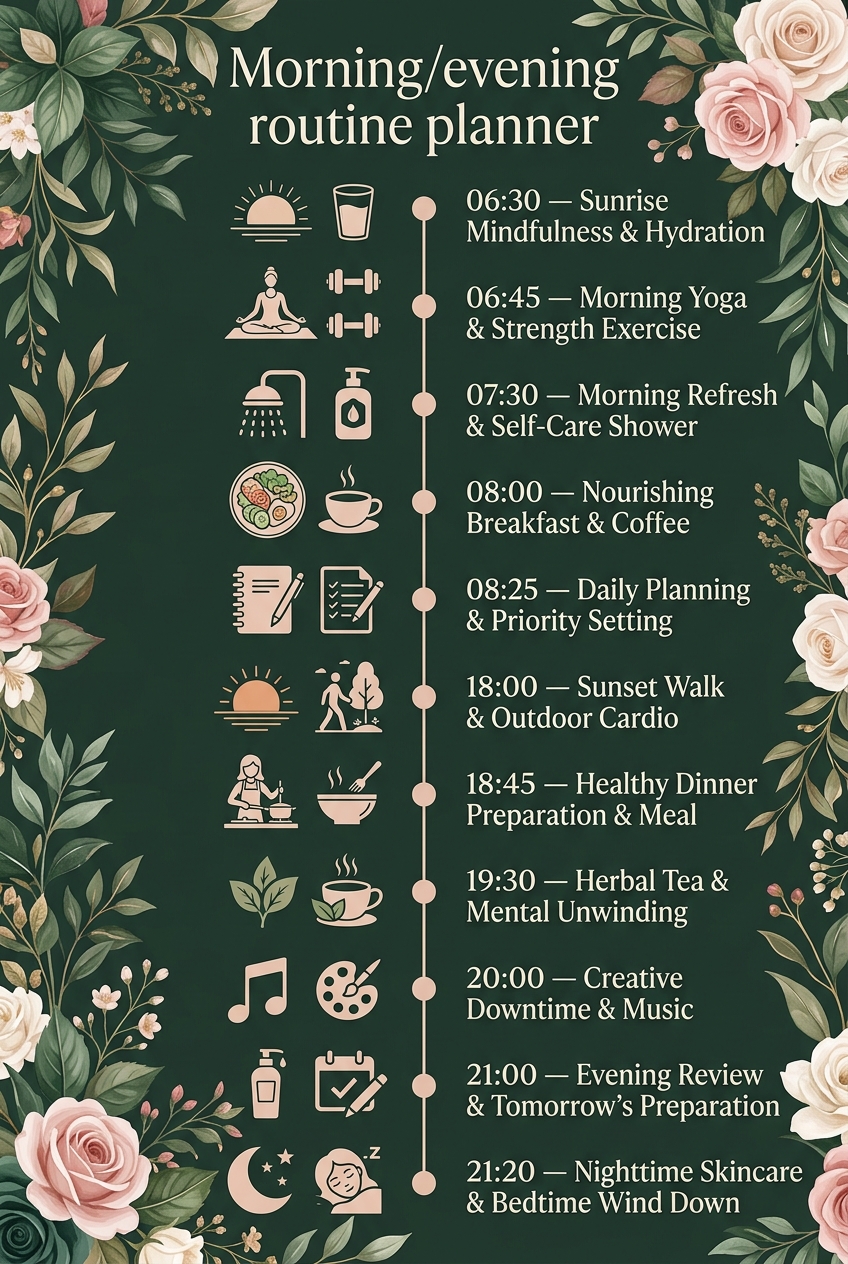
Why You Need a Morning/Evening Routine Planner
Without a deliberate strategy for your morning and evening hours, days often begin in a state of high-stress urgency and end in passive exhaustion. A structured routine converts chaotic transition periods into predictable, restorative habits.
First, morning routines leverage the body's natural cortisol awakening response to establish mental clarity before outside demands flood your brain. Engaging in physical light exposure and structured planning first thing ensures you act proactively rather than reactively.
Second, evening routines act as a biological bridge between high-demand work performance and restful, regenerative sleep. By systematically stepping down central nervous system arousal through screen-free unwinding and task closure, you substantially lower sleep latency and wake up feeling refreshed.
Finally, managing personal routines requires the same logistical discipline as professional events. Just as keeping a strict structure is vital when managing a corporate schedule using a board meeting timeline template, establishing daily personal bookends brings order, predictability, and calm to your entire home environment.
What to Include in a Morning/Evening Routine Planner
A balanced daily routine balances physiological needs with cognitive focus. To build an ideal flow, your routine should incorporate the following core components:
- Hydration and Light Exposure: Early sunlight and water to trigger immediate alertness and regulate melatonin rhythms.
- Physical Movement: Warm-up stretches, yoga, strength training, or outdoor cardio to boost circulation and metabolic health.
- Personal Hygiene and Self-Care: Refreshing showers and dedicated skincare routines to establish personal pride and relaxation.
- Nourishing Meals: Screen-free breakfast and dinner blocks to encourage intuitive eating and good digestion.
- Intentional Daily Planning: Dedicated desk time to review calendars and select top daily priorities.
- Work-to-Home Transitions: Physical shifts, like an outdoor walk, that mark the boundary between professional tasks and evening rest.
- Screen-Free Unwinding: Herbal tea, music, or reading that lowers cognitive brainwaves prior to bed.
- Next-Day Preparation: Night-time review and staging of clothing or items to guarantee a smooth next morning.
Phase 1: The Morning Energizer Phase
| Time | Event |
|---|---|
| 06:30 | Sunrise Mindfulness & Hydration |
| 06:45 | Morning Yoga & Strength Exercise |
| 07:30 | Morning Refresh & Self-Care Shower |
The early morning sequence is intentionally designed around human physiology. Immediate exposure to natural sunlight on the balcony or patio combined with a large glass of water triggers your body's circadian clock, suppressing leftover melatonin and increasing natural daytime energy. Following hydration with immediate, low-friction movement in the home gym elevates core body temperature and releases endorphins.
Transitioning directly into a dedicated self-care shower and skincare routine in the bathroom creates a clean tactile shift from exertion to preparation. By keeping this phase contained within a strict 60-minute window, you ensure your body transitions smoothly from rest to peak physical readiness without feeling rushed or overwhelmed.
Phase 2: The Morning Focus & Planning Phase
| Time | Event |
|---|---|
| 08:00 | Nourishing Breakfast & Coffee |
| 08:25 | Daily Planning & Priority Setting |
Once the body is fully awake, the schedule shifts focus toward fueling the brain and setting cognitive intention. Sitting down in the kitchen dining nook for a screen-free, nutrient-dense breakfast allows for proper digestion and sustained glucose release, avoiding the energy crashes associated with rushing out the door with a sugary coffee.
Following breakfast, moving to the home office desk for a brief 20-minute planning session establishes daily control. Writing down your top three priority targets before checking incoming communications prevents your focus from being hijacked by urgent, low-value requests. Whether you are managing personal workloads or organizing complex events with a birthday party timeline template or a baby shower timeline template, taking control of your early calendar ensures key outcomes are consistently achieved.
Phase 3: The Evening Transition & Recovery Phase
| Time | Event |
|---|---|
| 18:00 | Sunset Walk & Outdoor Cardio |
| 18:45 | Healthy Dinner Preparation & Meal |
| 19:30 | Herbal Tea & Mental Unwinding |
The evening sequence begins with a decisive mental shift away from professional responsibilities. An outdoor walk through the neighborhood park serves as a physical buffer, allowing your brain to process the workday's stresses while natural sunset light cues your brain that evening has arrived. Research published by authoritative sources like the Sleep Foundation highlights how twilight light exposure helps anchor evening melatonin secretion cycles.
Returning home to cook a whole-food meal in the dining room encourages mindful eating and family connection. Following dinner, moving to the living room lounge with caffeine-free herbal tea serves as an explicit signal to your nervous system that active work demands are officially over for the night.
Phase 4: The Bedtime Reset & Wind-Down Phase
| Time | Event |
|---|---|
| 20:00 | Creative Downtime & Music |
| 21:00 | Evening Review & Tomorrow's Preparation |
| 21:20 | Nighttime Skincare & Bedtime Wind Down |
The final phase of the day focuses on cognitive decompression and reducing next-day friction. Reserving an hour in the living room for passive creative leisure, such as reading physical books or listening to music, replaces blue-light screen exposure with calming auditory and visual inputs.
A brief 20-minute check-in at your office desk at 21:00 eliminates morning anxiety by organizing tomorrow's schedule and staging your clothing in advance. Much like executing a high-detail catholic wedding timeline or an anniversary party schedule template, flawless execution stems from thoughtful advance preparation. Concluding with a warm nighttime skincare routine and dimmed lights in the bedroom prepares the mind for rapid sleep onset and deep recovery.
Morning/Evening Routine Planner vs Daily Task Checklist
It is easy to confuse a daily routine planner with a standard task checklist, but their underlying functions serve entirely different purposes.
| Feature | Routine Planner | Task Checklist |
|---|---|---|
| Primary Focus | Habit flow and physiological state | Task completion and deliverables |
| Structure | Time-blocked chronological sequence | Unscheduled list of items |
| Objective | Energy management and lifestyle balance | Execution of specific output |
| Flexibility | Rhythm-based adaptation | Binary done / not done tracking |
| Time Orientation | Morning startup & evening recovery | Core working hours |
While a task checklist tracks what you need to do for work or chores, a morning/evening routine planner establishes how you manage your biological energy to perform those tasks. A checklist increases pressure; a routine planner provides the energetic foundation required to meet those demands.
Who Should Use This Template?
This structured schedule template is ideal for anyone seeking to reclaim control over their energy, time, and personal balance. Specifically, it offers tremendous value for:
- Remote & Hybrid Professionals: Workers who need clear physical and temporal boundaries between home life and work life.
- Executives & Team Leaders: Leaders requiring high cognitive endurance who must manage decision fatigue.
- Busy Parents & Caregivers: Individuals who must carve out non-negotiable self-care and exercise before family demands begin.
- Students & Researchers: Academics needing structured focus periods combined with deliberate restorative downtime.
- Fitness Enthusiasts: Athletes who prioritize structured nutrition, active recovery, and strict sleep hygiene.
Chronolio supports various organizational roles by helping individuals and team members map out seamlessly timed schedules for personal and professional growth.
How to Use This Template
- Duplicate or Edit the Schedule: Click the button on this page to open the editable template inside Chronolio.
- Adjust to Your Wake/Sleep Cycle: Align the 06:30 start time with your actual natural wake-up time, shifting all subsequent blocks proportionally.
- Personalize Your Activities: Swap out specific exercises, meal preferences, or leisure choices while keeping the core functional blocks intact.
- Download or Share: Download a copy in Word format or print a clean PDF summary to place on your nightstand or bathroom mirror.
- Track and Refine: Execute the flow for two weeks, tweaking time durations based on where friction arises.
Tips for a Successful Morning/Evening Routine
- Practice Habit Stacking: Pair a new desired habit with an existing automatic one (e.g., practice breathing exercises while waiting for morning coffee to brew).
- Protect the First and Last Hour: Keep smartphones and work laptops outside the bedroom to prevent digital inputs from disrupting your transition states.
- Prepare Your Environment early: Lay out workout clothes and place a water glass on your nightstand before going to sleep.
- Embrace Progressive Wind-Downs: Gradually dim house lighting after 20:00 to signal your brain that melatonin production should increase.
- Optimize Thermal Comfort: Keep your bedroom cool (around 65°F / 18°C) during nighttime skincare to facilitate core body cooling for sleep according to medical standards published by Harvard Health.
- Maintain Weekend Consistency: Keep your wake-up and bedtime within 30 to 45 minutes of your weekday routine to preserve circadian synchronization.
Common Mistakes to Avoid
- Overpacking the Schedule: Attempting to cram eight complex self-care habits into a 30-minute window leads to unnecessary stress.
- Ignoring Blue Light Impact: Watching television or scrolling social media right up until lights-out destroys sleep efficiency.
- Inflexible Execution: Viewing minor timing delays as a failure rather than adjusting fluidly throughout the day.
- Skipping the Night-Before Setup: Leaving task decisions and outfit selection for the morning creates immediate early morning panic.
- Inconsistent Bedtimes: Going to bed two hours later on certain weeknights disrupts your body's natural recovery signals.
- Exercising Too Close to Bedtime: Performing high-intensity cardio late in the evening raises heart rate and core temperature, making sleep difficult.
In Summary
- A morning/evening routine planner uses structured daily bookends to optimize personal energy, productivity, and sleep.
- Morning routines rely on immediate light exposure, hydration, and exercise to trigger natural alertness.
- Evening routines emphasize screen-free unwinding, progressive lighting reduction, and next-day preparation.
- Time-blocked daily routines eliminate decision fatigue and protect time for non-negotiable self-care.
- Consistency in sleep and wake times maintains long-term circadian rhythm alignment.
- Templates can easily be edited and exported to fit any work shift, remote schedule, or family dynamic.
Mastering your day begins with controlling how you open and close it. By implementing a deliberate morning and evening schedule, you replace daily chaos with balance, clarity, and sustainable energy. Customize your personal daily routine template today to build habits that last.
Customize Your Morning/Evening Routine Planner