







This Template at a Glance
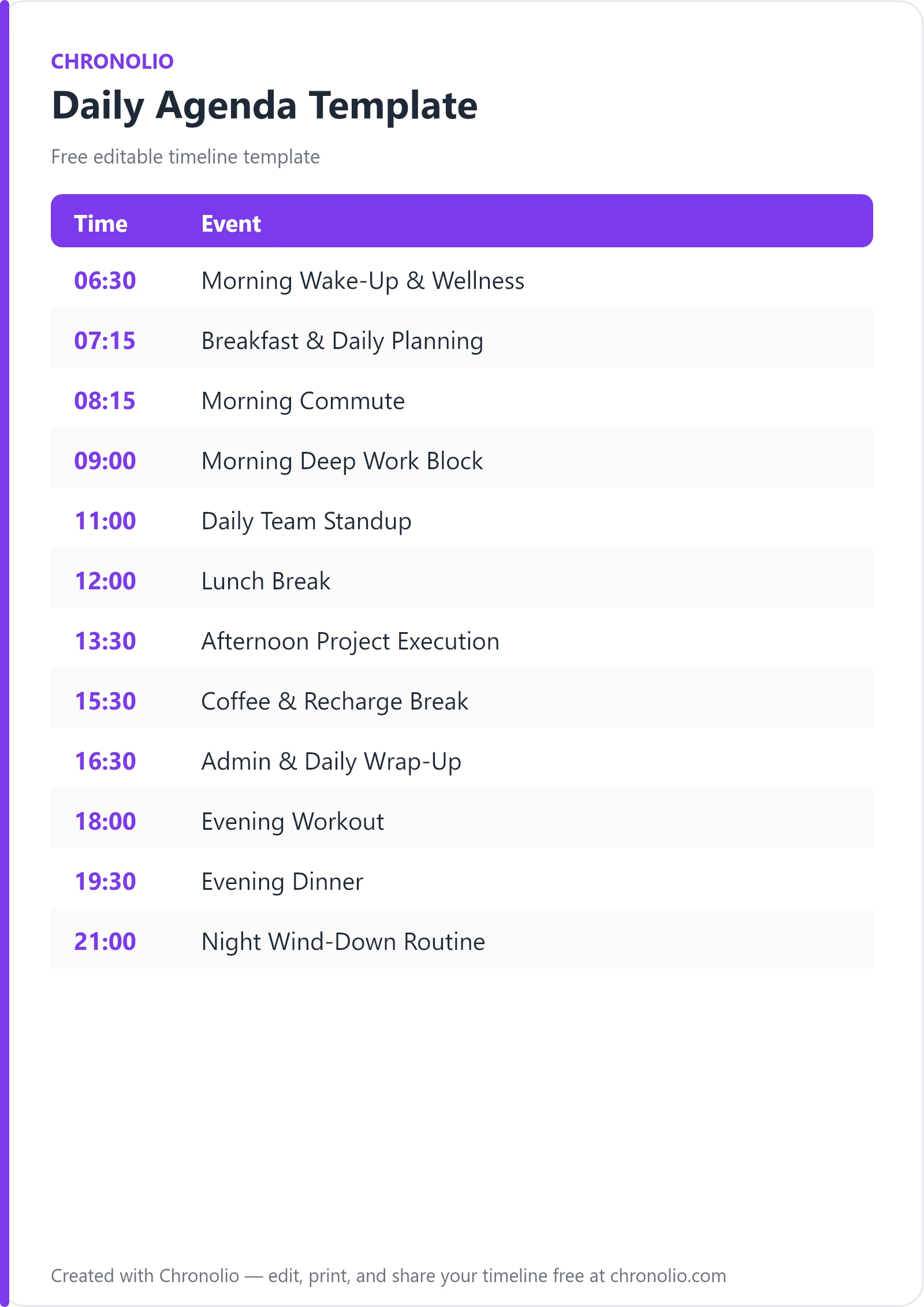
Here is the complete schedule this free template gives you — every time block, ready to edit, download, and share:
| Time | Event |
|---|---|
| 06:30 | Morning Wake-Up & Wellness |
| 07:15 | Breakfast & Daily Planning |
| 08:15 | Morning Commute |
| 09:00 | Morning Deep Work Block |
| 11:00 | Daily Team Standup |
| 12:00 | Lunch Break |
| 13:30 | Afternoon Project Execution |
| 15:30 | Coffee & Recharge Break |
| 16:30 | Admin & Daily Wrap-Up |
| 18:00 | Evening Workout |
| 19:30 | Evening Dinner |
| 21:00 | Night Wind-Down Routine |
What Is a Daily Agenda Template?
A daily agenda template is an intentional, hour-by-hour operational schedule designed to guide an individual through work tasks, collaborative meetings, personal wellness routines, and essential rest periods. Rather than relying on an overwhelming, unorganized to-do list, a structured agenda applies time blocking principles to assign specific clock times to individual activities.
This daily agenda template reflects proven productivity framework practices and real-world executive management structures. By managing cognitive load and accounting for natural ultradian performance cycles, it bridges the gap between raw task lists and successful daily execution. You can download this framework directly as a Word document or a printable PDF file to quickly tailor it to your workflow.
Use This Daily Agenda Template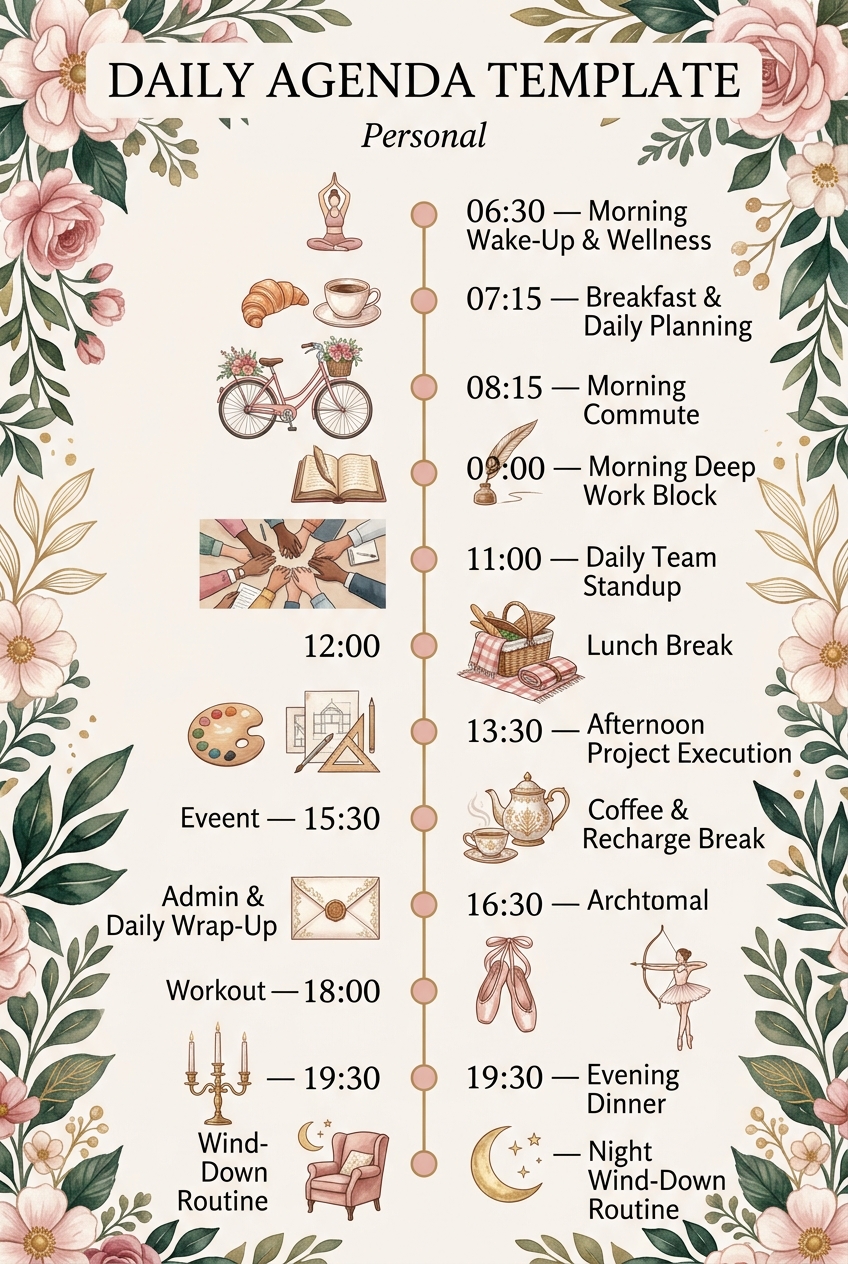
Why You Need a Daily Agenda Template
Without a predefined plan, modern professionals frequently fall victim to reactive working—spending their best energy answering opportunistic emails and chat messages instead of pushing core initiatives forward. Establishing a predictable chronological running order brings intentionality back to your mornings, afternoons, and evenings.
Organizing your operational schedule around focused time blocks dramatically reduces the continuous cognitive friction of context switching. When you know that admin work is scheduled for late afternoon, you can focus on morning strategic deliverables without feeling guilty about an unread inbox.
Furthermore, a well-constructed template protects your personal well-being. By explicitly scheduling meals, exercise, and evening wind-down routines, you set explicit boundaries that prevent professional burnout and preserve energy for personal pursuits, family gatherings, or major life events like planning a birthday party schedule.
What to Include in a Daily Agenda Template
A complete, balanced daily schedule must account for personal preparation, peak cognitive focus, administrative maintenance, and personal recovery. A high-performing agenda includes:
- Morning Grounding & Preparation: Light movement, hydration, breakfast, and strategic intention setting before opening communication tools.
- Dedicated Deep Work Blocks: Uninterrupted hours reserved exclusively for high-impact analytical or creative output.
- Synchronous Team Touchpoints: Brief, direct team alignment meetings to unblock workflows and maintain project momentum.
- Deliberate Rest Breaks: Structured mid-day meals and quick afternoon mental resets to maintain focus.
- Task Execution & Inbox Clearance: Dedicated slots for secondary tasks, client emails, and workspace wrap-up.
- Evening Transition & Wind-Down: Physical movement, family engagement, screen-free rest, and sleep preparation.
Phase 1: Morning Grounding & Commute
| Time | Event |
|---|---|
| 06:30 | Morning Wake-Up & Wellness |
| 07:15 | Breakfast & Daily Planning |
| 08:15 | Morning Commute |
The early morning hours dictate the tone and focus of your entire day. Starting at 06:30 in the Home Living Room, prioritizing hydration and mindfulness allows your nervous system to wake up without immediate sensory overload from digital notifications. Following light physical stretching, enjoying a quiet beverage prepares your mindset for intentional action.
Moving to the Kitchen Dining Area at 07:15 transforms breakfast into a strategic planning moment. Consuming a balanced meal fuels early cognitive function, while reviewing your primary objectives ensures you step out the door with crystal-clear priorities. During the 08:15 commute on the Metro Transit Line, using transit time for an educational podcast or inspiring audio keeps your brain engaged without accumulating premature fatigue.
Phase 2: High-Focus Morning Work & Alignment
| Time | Event |
|---|---|
| 09:00 | Morning Deep Work Block |
| 11:00 | Daily Team Standup |
Your peak analytical capacity typically occurs during the first few hours of the working morning. Arriving at Desk 4B in the Main Office for a 09:00 start, protecting two hours for deep work guarantees that complex problem-solving and critical project deliverables get completed before daily distractions take over. According to research on human performance published by the Harvard Business Review, managing internal energy rhythms rather than just time is key to sustaining high output.
At 11:00, the focus shifts from individual execution to team synchronization in Conference Room Alpha. The daily team standup serves as an efficient operational touchpoint to align on goals, highlight achievements, and remove blockers. Keep discussions tightly focused so team members can transition back to execution mode quickly. If your organization requires deeper corporate governance beyond brief daily touchpoints, consider pairing your routine with a formal board meeting timeline.
Phase 3: Afternoon Execution & Recharge
| Time | Event |
|---|---|
| 12:00 | Lunch Break |
| 13:30 | Afternoon Project Execution |
| 15:30 | Coffee & Recharge Break |
| 16:30 | Admin & Daily Wrap-Up |
Midday recovery is non-negotiable for sustained daily focus. Stepping away from your desk at 12:00 for lunch at a Downtown Cafe physically disconnects you from work, letting your mental slate clear. A short walk outside provides natural daylight exposure, which research supported by organizations like the Sleep Foundation shows helps keep circadian rhythms aligned for better night-time sleep.
Returning to Desk 4B at 13:30 initiates secondary execution time. This block is ideal for collaborative projects, vendor communication, and updating project management task boards. Recognizing the inevitable 15:30 afternoon energy slump, a brief recharge break in the Office Breakroom provides space for quick social connection and a refreshing beverage. Finishing the professional day at 16:30 with administrative maintenance—answering emails, filing daily notes, and tidying up your workspace—ensures you leave work with a clear mind.
Phase 4: Evening Transition & Wellness
| Time | Event |
|---|---|
| 18:00 | Evening Workout |
| 19:30 | Evening Dinner |
| 21:00 | Night Wind-Down Routine |
Transitioning out of work mode requires clear physical and psychological boundaries. Heading to the Community Fitness Center at 18:00 uses exercise to flush out workday stress and clearly mark the end of the professional agenda. Physical exertion helps signal to your body that the work period is officially over.
Rejoining family or household members at 19:30 in the Home Dining Room shifts energy toward social connection and healthy nutrition. Finally, entering the Home Bedroom at 21:00 for a screen-free wind-down routine lowers core temperature and heart rate. Reading print literature and disconnecting from bright digital monitors supports proper melatonin production, setting you up for deep restorative sleep. This structural balance between high productivity and active recovery is just as useful when hosting major life events, such as structuring an anniversary party schedule or organizing a baby shower timeline.
Daily Agenda Template vs Daily To-Do List
Understanding how an operational agenda differs from a simple checklist is fundamental to time management.
| Agenda Element | Daily Agenda Template | Standard To-Do List |
|---|---|---|
| Structure | Chronological, time-blocked hours | Unordered vertical list |
| Capacity Awareness | Built-in limits based on available daylight | Unlimited, often leading to overcommitment |
| Context Switching | Minimized by grouping similar tasks | High risk of jumping randomly between tasks |
| Wellness Inclusion | Explicitly schedules meals, breaks, and exercise | Focuses almost entirely on work tasks |
| Focus Type | Separates deep work from light administrative tasks | Treats every item as having equal priority |
A standard to-do list captures what needs to be done, but a ** daily agenda template dictates when tasks happen**. By assigning tasks to real time slots based on priority and energy levels, you eliminate realistic scheduling conflicts and protect essential recovery time.
Who Should Use This Template?
This versatile structure supports professionals and individuals managing complex personal responsibilities, including:
- Corporate Executives & Managers: Who must balance high-level strategic focus with daily team syncs and administrative oversight.
- Remote & Hybrid Knowledge Workers: Who need clear structural boundaries between home life and professional responsibilities.
- Project Leads & Coordinators: Managing multiple concurrent timelines and cross-functional teams.
- Freelancers & Independent Contractors: Who require self-imposed structure to manage client deliverables alongside business admin.
- Event Organizers: Balancing operational daily work while executing complex schedules, such as a Christian wedding timeline or a detailed Catholic wedding timeline.
Chronolio offers custom support tailored specifically for various organizational roles managing complex daily schedules and operational workflows.
How to Use This Template
- Download or Duplicate the Master Schedule: Access the layout in your preferred platform using our direct Word document or print-ready PDF file.
- Establish Fixed Time Constraints: Input your non-negotiable commitments first, such as fixed team meetings, hard start/stop work times, or personal appointments.
- Protect Your Deep Work Windows: Place your most challenging analytical or creative tasks into early high-energy slots.
- Group Secondary Administrative Tasks: Batch small, reactive tasks like emails and short phone calls into dedicated afternoon wrap-up blocks.
- Review and Adjust Daily: Take five minutes during your morning planning session to refine time slots based on emerging priorities.
Tips for a Successful Daily Agenda
- Respect Your Natural Circadian Rhythm: Schedule high-focus tasks during your peak energy hours and save passive administrative tasks for low-energy periods.
- Incorporate Realistic Buffer Times: Build in 10 to 15 minutes of buffer time between major work blocks to accommodate overrun meetings and bio breaks.
- Batch Similar Micro-Tasks: Avoid checking email constantly; collect minor communications and handle them together during your end-of-day admin block.
- Protect Your Mid-Day Rest: Resist the temptation to work through lunch; stepping away improves afternoon focus and productivity.
- Enforce Evening Screen Boundaries: Turn off work notifications and screens at least 60 minutes before bed to protect your sleep quality.
Common Mistakes to Avoid
- Overpacking the Schedule: Booking every minute without buffer time leads to missed deadlines as soon as an unexpected delay happens.
- Ignoring Energy Levels: Scheduling complex strategic planning late in the afternoon when mental energy is drained leads to poor output.
- Treating the Agenda as Rigid: Refusing to adapt your schedule when urgent priorities come up creates unnecessary stress.
- Skipping Admin Maintenance: Omitting dedicated wrap-up time causes unanswered messages and incomplete task lists to spill over into the next morning.
- Failing to Schedule Rest: Treating breaks as optional usually leads to burnout and lower overall quality of work.
In Summary
- A daily agenda template applies time blocking to balance work, health, and personal recovery.
- Morning deep work blocks protect focus for high-priority projects before daily distractions occur.
- Scheduled midday breaks prevent afternoon burnout and maintain steady energy levels.
- End-of-day admin blocks clear out inboxes and help organize task lists for the following morning.
- Evening wind-down routines establish clear boundaries between professional responsibilities and home life.
Adopting a structured daily framework turns chaotic task lists into an organized, realistic schedule. By balancing deep work, team alignment, administrative maintenance, and personal well-being, this template helps working professionals, managers, and project leaders maintain high productivity without burning out.
Use This Daily Agenda Template