







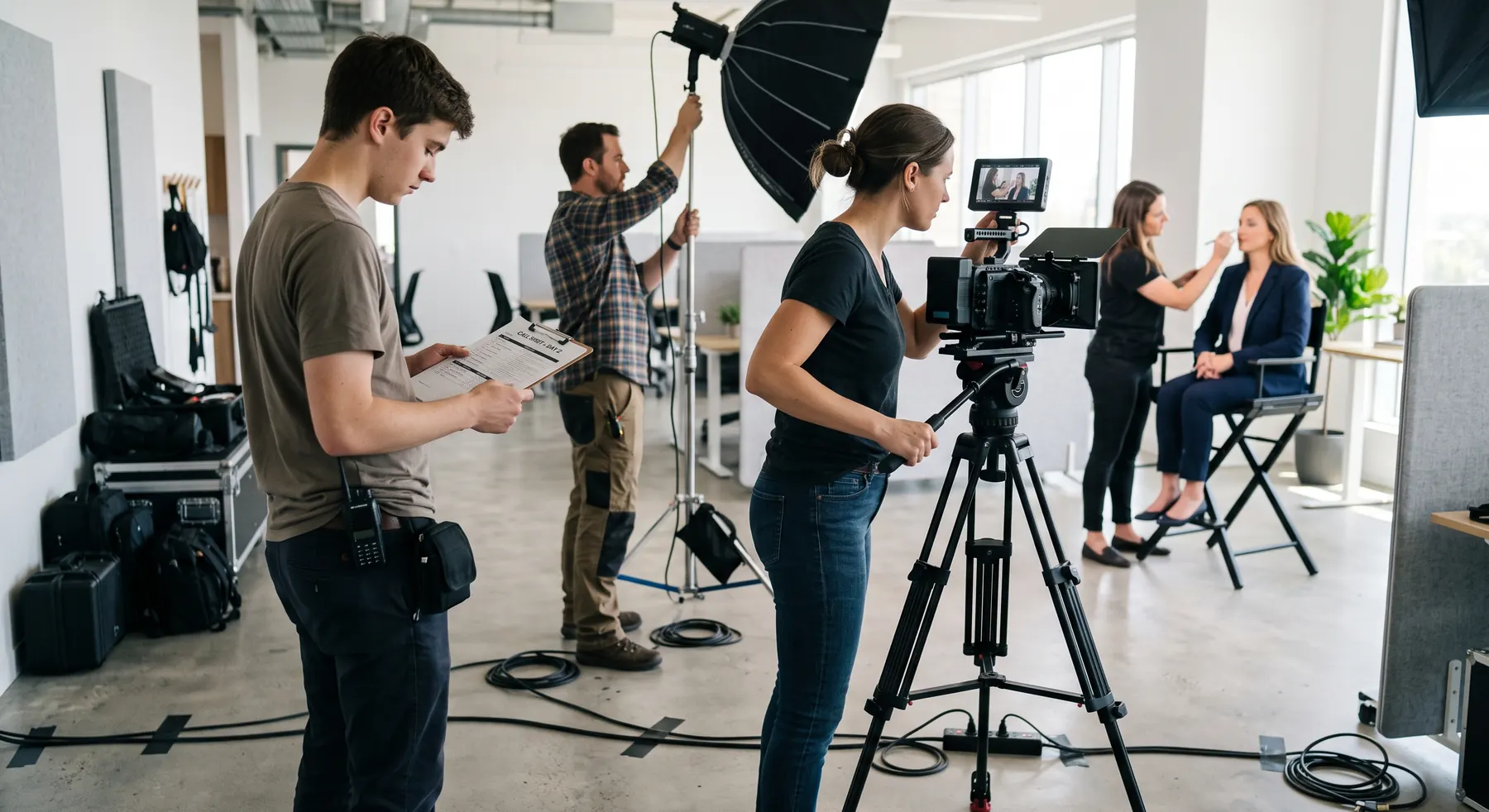
Setups, not shots
The shot list is what the client reads. The setup is what the day is actually made of.
A setup is a camera position plus its lighting. Every time the camera moves somewhere meaningfully different, the lights move with it, and nothing is recorded until they are right. That reset is where the hours go — not the takes. A two-minute piece to camera can take forty-five minutes to light and five minutes to shoot.
So a schedule built as "shot 1, shot 2, shot 3" with a few minutes each is fiction. A schedule built as setups, with realistic reset time between them and shots grouped within each setup, is one the crew can actually hit.
The single most useful thing anyone planning a shoot can do is go through the shot list and group every shot by setup, then by location. Script order is irrelevant on the day; the edit puts it back in order.
Realistic durations
These hold up for corporate, commercial, and branded content with a small-to-medium crew:
| Block | Realistic time | Notes |
|---|---|---|
| Crew call to first shot | 60–90 min | Load-in, build, light the first setup |
| Talent hair and makeup | 45–90 min | Longer for multiple talent or period looks |
| New lighting setup | 30–60 min | The unit of the whole day |
| Adjustment within a setup | 10–20 min | New angle, same lighting scheme |
| Company move | 60–90 min | Even for short distances |
| Meal break | 30–60 min | Within about six hours of call |
| Wrap and load-out | 45–60 min | Longer if returning a location to its original state |
A full, achievable day for a small crew is often eight to twelve setups. Complex lighting, several talent, or a company move can halve that — and a day planned at twenty setups is a day that will cut the last six, usually the ones the client cared about most.
Call times: work backwards from the first shot
Crew call and talent call are not the same time, and calling everyone at once is one of the most common scheduling mistakes on smaller shoots.
Work backwards from the moment the first setup will be lit. If that is 09:00 and hair and makeup takes an hour, talent needs to be camera-ready at 09:00, in the chair by 08:00, and called at around 07:45 to allow for arrival and wardrobe. Call them at the 07:00 crew call and they spend an hour watching lights go up — which costs money on a day rate and energy on camera.
Stagger talent calls the same way for later setups. A presenter who is not needed until the afternoon should not arrive at breakfast.
The company move
Moving the whole unit between locations is usually the most expensive line on the schedule, and the one most often underestimated.
Packing down takes time. Travel takes longer than the map says with several vehicles. Parking and access at the new location take time. Rebuilding and relighting take a full setup's worth. Sixty to ninety minutes is realistic even when the two locations are ten minutes apart.
The fix is structural: one move is survivable, two in a day usually is not. Group everything by location, shoot each location out completely, and if a second move looks necessary, check whether it can become a second day instead.
The meal break is a hard line
Plan a proper meal within about six hours of crew call. Many union agreements require it and apply penalties when it is missed; on non-union shoots there is no penalty, but a crew that has worked six hours without food is slower, less careful, and less safe.
It is also the natural point to re-plan. If the morning ran long, the meal break is when the producer and director decide what the afternoon drops — calmly, with food, rather than at 17:30 with the light going.
Light is a location too
Exterior setups are scheduled around the sun, not the other way round. Sunrise, sunset, and the direction of light at each location should be on the schedule, and golden-hour setups need to be ready to roll before the light arrives, not being lit while it passes.
The arithmetic is the same one photographers use for wedding portraits — start before the good light, not at it — and there is a worked version in how much time to allow for wedding photos.
Build your shoot-day schedule freeThe run of show builder lays out the day as timed blocks with owners and notes, and moves every later block when one runs long — so a slow first setup shows you immediately what it costs the afternoon.
The call sheet
The schedule becomes a call sheet, sent the evening before the shoot. It should carry:
- The date, general crew call, and individual call times
- Talent calls, with hair, makeup, and wardrobe times
- Location address, parking, and access instructions
- The day's schedule by setup, with the location for each
- Sunrise, sunset, and the weather forecast
- Key contacts, and the nearest hospital
Call sheets change — a location falls through, a presenter's flight moves, rain rewrites the exterior plan. A PDF sent at 20:00 is out of date by 22:00 when that happens. A live schedule everyone can open on their phone means the change reaches the grip and the runner, not just the people on the email thread.
Video and photo production coordinators running several shoots a month gain most from keeping a reusable day structure — call, build, setups, meal, move, wrap — that each new shoot adapts rather than rebuilds. The shot list is new every time; the shape of a well-run day barely changes. Whoever holds the schedule also needs to own the cue-by-cue version for anything live, which is a different document covered in what a run of show is.
For how other teams plan production days, see production days.