






This Template at a Glance
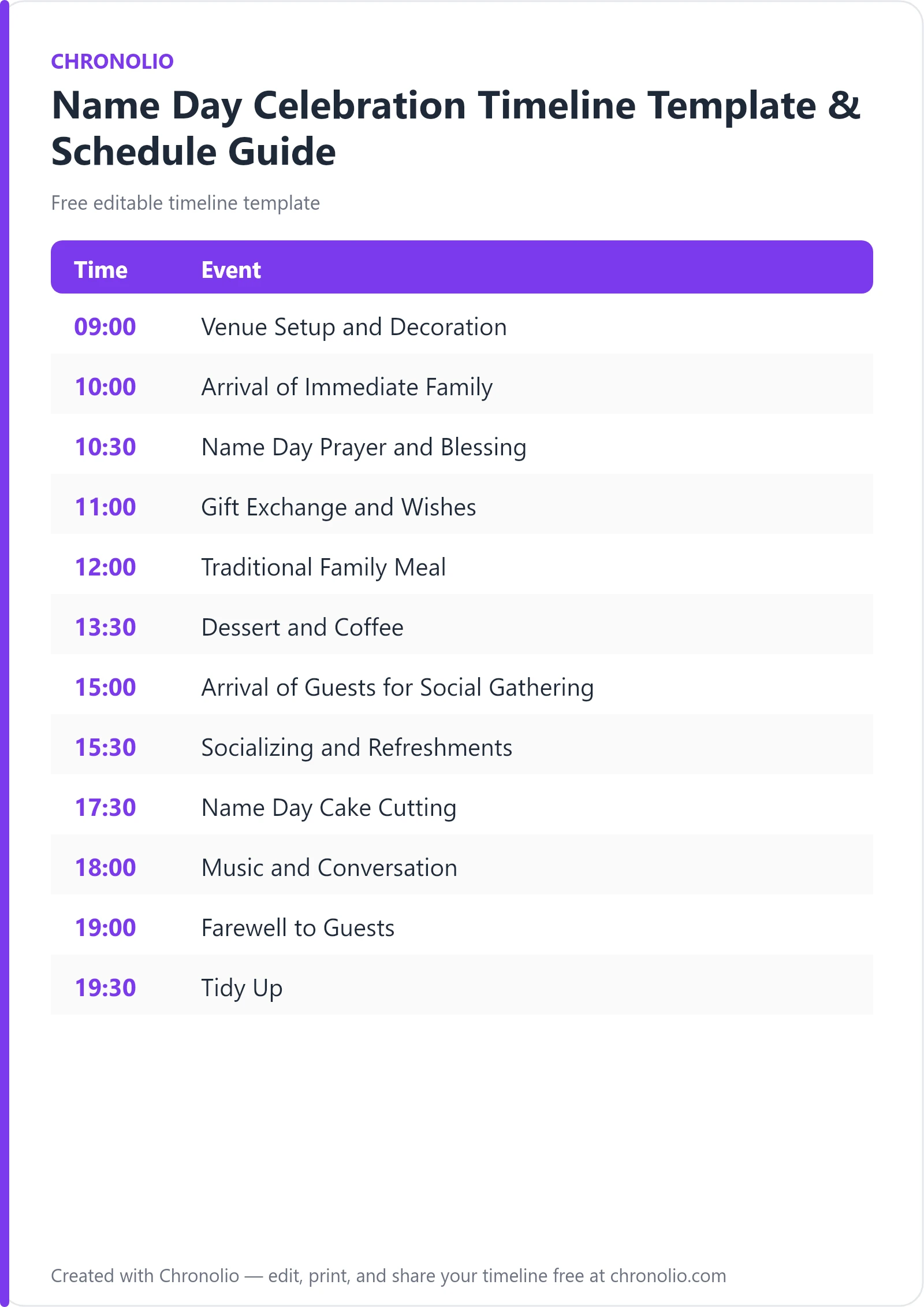
Here is the complete schedule this free template gives you — every time block, ready to edit, download, and share:
| Time | Event |
|---|---|
| 09:00 | Venue Setup and Decoration |
| 10:00 | Arrival of Immediate Family |
| 10:30 | Name Day Prayer and Blessing |
| 11:00 | Gift Exchange and Wishes |
| 12:00 | Traditional Family Meal |
| 13:30 | Dessert and Coffee |
| 15:00 | Arrival of Guests for Social Gathering |
| 15:30 | Socializing and Refreshments |
| 17:30 | Name Day Cake Cutting |
| 18:00 | Music and Conversation |
| 19:00 | Farewell to Guests |
| 19:30 | Tidy Up |
What Is a Name Day Celebration Timeline?
A Name Day Celebration Timeline is a specialized schedule designed to orchestrate the traditional festivities surrounding a person's saint's day or named feast day. Observed across many European, Latin American, and Eastern Orthodox cultures, a Name Day honors the Christian saint after whom a person was named. Unlike modern birthday parties, these occasions deeply blend spiritual reverence, family heritage, and open-door hospitality.
Having managed dozens of residential and venue-based cultural events, I can tell you that structuring your feast day hours effectively prevents the host exhaustion that often comes with all-day entertaining. This comprehensive schedule reflects real-world cultural traditions and modern hospitality best practices, bridging sacred home blessings with bustling afternoon social drop-ins. If you are comparing cultural milestones, you might also find our birthday party timeline template or our anniversary party schedule helpful for structuring host duties.
Customize Your Name Day Celebration TimelineWhy Name Day Celebrations Need a Timeline
Name Day celebrations are uniquely fluid events. In traditional households—whether observing Greek, Polish, Italian, or Scandinavian customs—friends, neighbors, and extended kin often drop by unannounced or across wide time windows to offer traditional well wishes ("Chronia Polla" or "Sto Lat"). Without a clear framework, hosts often find themselves cooking meals, answering doors, and organizing seating simultaneously.
By adopting a structured running order, hosts can create distinct boundaries between the sacred morning family routines and the casual afternoon open house. This separation gives you room to prepare traditional recipes, maintain sacred family rituals, and actually sit down with your guests rather than spending the entire feast working in the kitchen.
Furthermore, clear timing ensures that spiritual elements—such as a home blessing, prayer, or candle lighting—take place when immediate family members are fully present and focused, long before the excitement of an open social gathering begins.
What to Include in a Name Day Celebration Timeline
To run a memorable and stress-free feast day, your itinerary should incorporate these core elements:
- Prep and Space Decoration: Decorating the living and dining quarters with fresh flowers, candles, and formal table settings.
- Family Arrival and Sacred Blessing: Welcoming inner-circle relatives for morning prayers, personal toasts, and gift exchanges.
- The Traditional Feast: A multi-course sit-down meal featuring regional comfort dishes, traditional baked goods, and lingering dessert service.
- Open Social Reception: Welcoming extended family, godparents, and community members for drop-in hospitality.
- Cake Cutting Ritual: Gathering all attendees for the ceremonial cake cutting, traditional songs, and photos.
- Winding Down: Transitioning into soft background music, evening tea, relaxed conversations, and venue cleanup.
Morning Preparation, Blessing, and Family Honors
The early morning of a Name Day should feel tranquil, sacred, and organized. Taking time early in the day to finish room arrangements guarantees that the household feels peaceful when the first family members step through the main entrance.
| Time | Event |
|---|---|
| 09:00 | Venue Setup and Decoration |
| 10:00 | Arrival of Immediate Family |
| 10:30 | Name Day Prayer and Blessing |
| 11:00 | Gift Exchange and Wishes |
Starting at 09:00, focus on preparing the family home by arranging table linens, setting out fresh floral centerpieces, and establishing a dedicated coat area near the main entrance. Laying out serving platters and glassware in advance keeps the host from hunting through cabinets once visitors arrive.
When immediate family members arrive at 10:00, keep the mood relaxed. At 10:30, transition into the living room for the Name Day Prayer and Blessing, taking time to offer gratitude for health, longevity, and family heritage according to your faith tradition. Learn more about the cultural origins of these traditions on Britannica’s Name Day overview. Following the blessing, reserve half an hour for immediate family to exchange thoughtful gifts and personal well wishes before dinner service begins.
+-----------------------------------------------------------------------+ | MORNING FLOW & BLESSING | | 09:00 Venue Prep --> 10:00 Family Arrival --> 10:30 Prayer/Blessing | +-----------------------------------------------------------------------+
The Traditional Family Feast
Food sits at the absolute center of Name Day hospitality. Reserving the midday block exclusively for a sit-down meal allows immediate family members to bond deeply over beloved regional recipes without modern distractions.
| Time | Event |
|---|---|
| 12:00 | Traditional Family Meal |
| 13:30 | Dessert and Coffee |
At 12:00, gather everyone into the dining room for a formal, multi-course feast. Because Name Day dishes often involve lengthy roasting or baking processes, plating dishes family-style ensures the food stays warm while everyone serves themselves at their own pace.
By 13:30, clear main dinner plates and transition smoothly into dessert and coffee. Serving freshly brewed espresso, Greek coffee, or tea alongside sweet pastries allows the conversation to flow naturally. If you are coordinating food prep across multi-generational gatherings, you can cross-reference our family reunion timeline for catering tips.
Afternoon Open Hospitality, Cake Cutting, and Farewells
The late afternoon shifts the celebration’s tone from a quiet family gathering into a vibrant social open house. This phase accommodates broader social networks, godparents, and church friends who wish to pay their respects.
| Time | Event |
|---|---|
| 15:00 | Arrival of Guests for Social Gathering |
| 15:30 | Socializing and Refreshments |
| 17:30 | Name Day Cake Cutting |
| 18:00 | Music and Conversation |
| 19:00 | Farewell to Guests |
| 19:30 | Tidy Up |
At 15:00, open the main entrance for extended family and social guests. Set up a drink and appetizer station in the living room and garden patio so arriving visitors can grab light refreshments and mix easily. Creating multiple social zones prevents crowded bottlenecks in small hallways.
At 17:30, bring everyone back together in the dining area for the ceremonial Name Day Cake Cutting, complete with festive singing and group photos. As afternoon turns into evening, lower the lighting and put on soft background music for intimate conversations. By 19:00, begin wrapping up guest departures, leaving plenty of time at 19:30 to clear table settings, wash dishware, and reset the home. If your celebration is welcoming relatives returning from overseas, combine this schedule with our welcome home party timeline.
+-----------------------------------------------------------------------+ | AFTERNOON & EVENING FLOW | | 15:00 Social Arrival --> 17:30 Cake Cutting --> 19:00 Guest Farewell | +-----------------------------------------------------------------------+
Name Day Celebration Timeline vs Birthday Party Timeline
While people sometimes confuse Name Days with birthdays, their purpose, guest expectations, and hosting dynamics differ significantly:
| Aspect | Name Day Celebration Timeline | Birthday Party Timeline |
|---|---|---|
| Core Focus | Honoring a patron saint, heritage, and faith traditions | Celebrating personal aging milestones and individual birth |
| Guest Structure | Tiered: Morning family meal + afternoon open house | Single group invitation with fixed start/end times |
| Gifting Customs | Small traditional tokens, sweets, flowers, or books | Personal wishlist items, wrapped toys, or major gift boxes |
| Pacing & Flow | Slow, conversation-led, flexible drop-in hours | Activity-driven, structured games, dynamic party elements |
| Catering Style | Traditional multi-course meal plus continuous buffet | Finger foods, buffet catering, or commercial restaurant venue |
A Name Day focuses heavily on open hospitality and religious heritage, whereas a typical birthday party centers around age-specific activities and tight group entertainment schedules.
Who Should Use This Template?
This printable schedule is tailored for hosts managing traditional home-based or private venue gatherings. On Chronolio, our scheduling tools support diverse event management roles, from private hosts to professional caterers.
This template is ideal for:
- Eastern European & Mediterranean Families: Households celebrating Orthodox or Catholic saint feast days (e.g., St. George, St. Nicholas, St. John).
- Multi-Generational Households: Families coordinating events that seat grandparents, godparents, and young children under one roof.
- Cultural Community Leaders: Hosts welcoming neighbors, parish members, and extended friends through an open-house format.
- Event & Hospitality Planners: Coordinators hired to execute seamless, high-end cultural dinners at private residences.
- Godparents & Sponsors: Relatives co-hosting formal blessing ceremonies and family feasts.
How to Use This Template
- Download or Duplicate: Access our free files in Word (.docx) or PDF (.pdf) format, or duplicate this schedule directly into Chronolio.
- Adjust for Faith Customs: Shift the morning prayer time to align with your parish's morning liturgy or church service if attending mass first.
- Set Your Open-House Window: Customize the social gathering hours (15:00–18:00) on your written invitations so drop-in guests know when to arrive.
- Assign Kitchen Responsibilities: Map out who oversees reheating main dishes, brewing coffee, and managing the cake presentation.
- Share with Key Helpers: Send the finalized running order to family members assisting with setup or greeting visitors at the door.
Tips for a Successful Name Day Celebration
- Prep Traditional Dishes early: Cook labor-intensive stews, roasts, or traditional breads the day before so you aren't stuck at the stove.
- Set Up a Continuous Coffee Station: Name Day guests consume plenty of coffee and tea. Keep a thermal carafe filled and ready near the dessert tray.
- Create Clear Guest Zones: Keep main dining chairs reserved for sit-down meals, while arranging patio and living room seating for drop-in socializers.
- Keep Sweet Favors Near the Entrance: Have small boxes of traditional sweets (koufeta, chocolates, or pastries) ready near the door to hand guests as they leave.
- Prepare Background Playlists: Select gentle instrumental, traditional folk, or acoustic music to maintain a cozy atmosphere throughout the afternoon.
- Designate a Gift Table: Place a small side table in the living room for flowers, name day cards, and token gifts so surfaces stay clutter-free.
Common Mistakes to Avoid
- Over-scheduling the Afternoon: Avoid planning rigid party games during the afternoon open house; guests prefer relaxed conversation and catching up.
- Skipping the Morning Buffer: Rushing from setup directly into prayer creates unnecessary stress—always build in 30 minutes of buffer time.
- Running Out of Clean Glassware: Drop-in guests often use multiple cups for coffee and cold drinks. Keep extra drinkware ready or assign a helper to dishwasher duty.
- Forgetting Food Warmers: Leaving traditional dishes exposed on counters causes them to cool quickly during lingering family conversations. Use chafing dishes or slow cookers.
- Not Communicating Arrival Times: Failing to specify open-house hours on invitations can lead to early visitors interrupting your private family lunch.
In Summary
- Purpose: A structured guide that balances traditional saint's day religious blessings, formal family meals, and casual afternoon hospitality.
- Target Audience: Mediterranean, Eastern European, and Christian families celebrating patron saint days and cultural name traditions.
- Pacing Strategy: Splits the day into private morning worship/dining (10:00–14:00) and public afternoon drop-in socializing (15:00–19:00).
- Key Highlights: Includes dedicated time blocks for home setup, sacred family prayer, gift wishes, multi-course dining, cake cutting, and organized cleanup.
- Flexibility: Easily downloadable and editable to match church service times, dietary preferences, and home layouts.
Planning a culturally rich feast day should be an enjoyable, sacred, and deeply rewarding experience. By following this Name Day Celebration Timeline, hosts, caterers, and multi-generational families can honor long-standing traditions, extend warm open-door hospitality, and enjoy every moment with loved ones.
Customize Your Name Day Celebration Timeline