Generate Timelines, Schedules and Agendas with AI!
In an age where AI is impacting everything, isn't it time to incorporate AI in your planning process?

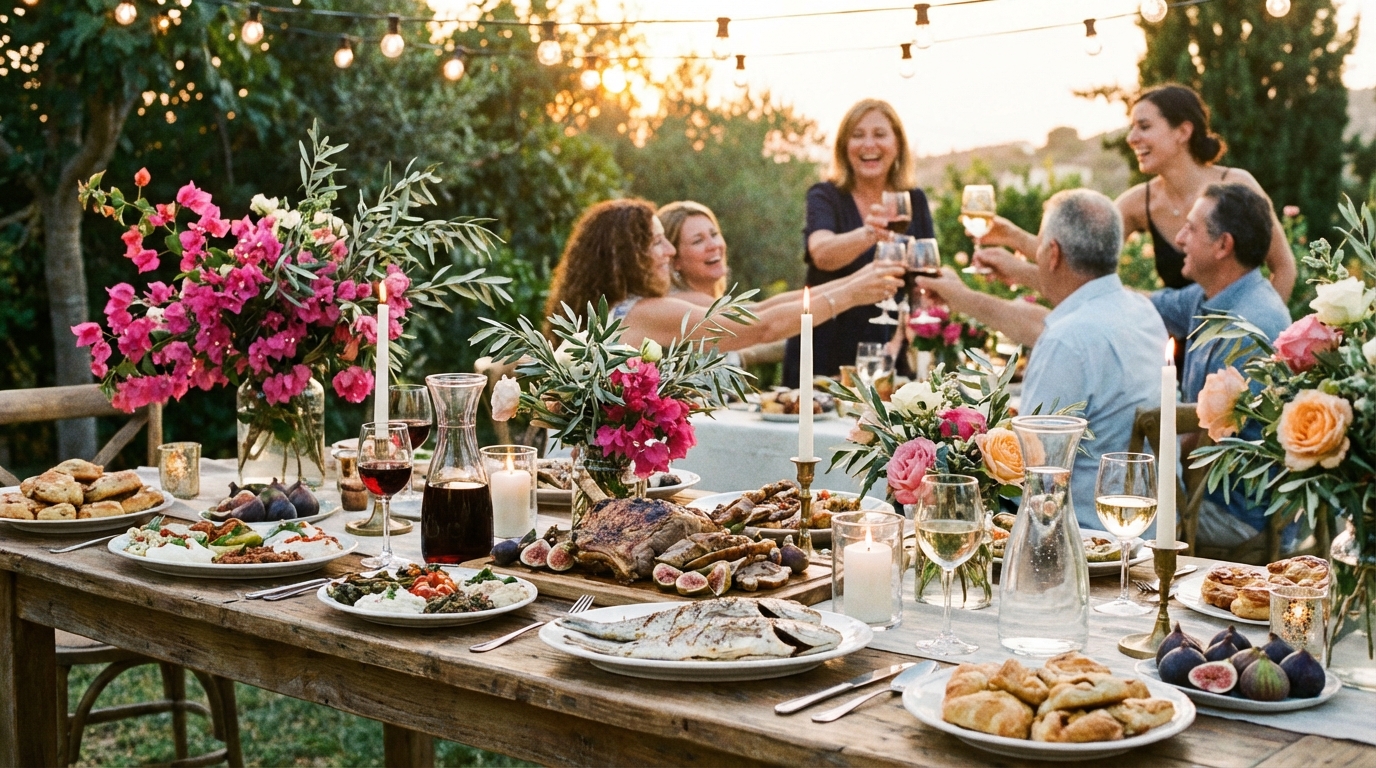
Plan the perfect event with our Name Day Celebration Timeline. Discover essential traditions, party planning tips, and a step-by-step schedule for your feast day.
Here’s the thing about hosting a feast day: it looks simple on paper, but it’s an emotional marathon. This Name Day Celebration Timeline guide breaks down a full-day itinerary that balances intimate family traditions with a broader social gathering, helping you host without burning out before the cake is cut.
Planning a Name Day Celebration Timeline is a unique beast. You know what I mean? It’s not just a birthday party where you order pizza and call it a day. Whether you are following Catholic name day traditions or planning a big Greek feast, there is a weight to it. You are juggling religious observance, deep-rooted family expectations, and the chaos of hosting people in your own living room. Why is it that the most sentimental events are always the hardest to organize? Trying to map this out on a scrap of paper or a rigid Excel sheet usually leads to a headache. You need a flow that breathes.
In this guide, we are going to walk through a specific schedule—one that starts with a morning blessing and ends with an evening farewell. We’ll look at how to handle the transition from a heavy family lunch to a casual open house, and I’ll share some venue-owner secrets on how to keep your house standing through it all.
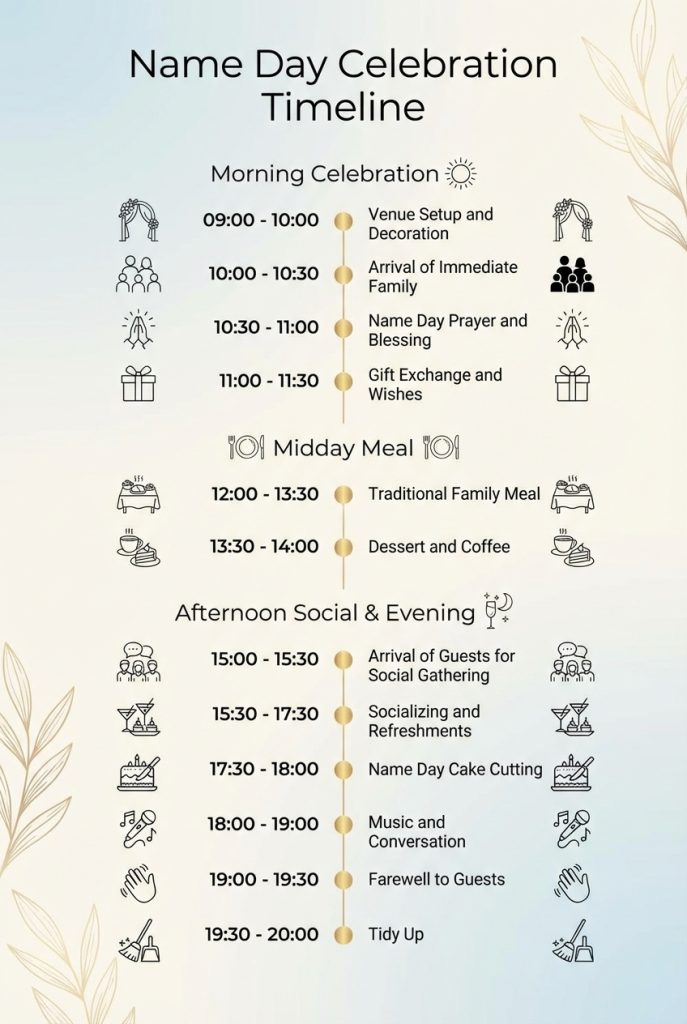
The first half of this timeline is dedicated to the inner circle. It’s quieter, more spiritual, and centers on the immediate family.
We start at 9:00 AM. Honestly, if you can start earlier, do it. This hour is for “Venue Setup and Decoration,” which is fancy planner speak for “frantically hiding the clutter.” Since this is happening in the living and dining areas, you want to set the tables now. Don’t wait until 11:55 AM. Arranging the seating is key here—Grandma needs a comfortable chair, and you need a clear path to the kitchen.
This timeline buffers 30 minutes for the arrival of immediate family. It’s a soft start. You’re welcoming parents, siblings, or godparents. It allows everyone to settle in, take off their coats, and maybe help you finish that last bit of prep in the kitchen before the formal stuff begins.
This is what separates a saint feast day celebration schedule from a regular party. At 10:30 AM, the schedule pauses for the “Name Day Prayer and Blessing.” It’s only 30 minutes, but it grounds the day. Whether it’s a formal blessing from a visiting priest or a heartfelt prayer led by the head of the household, this moment in the living room sets the intention. It’s about wishing health and prosperity, and it shifts the energy from “hosting stress” to gratitude.
Right after the blessing, while everyone is still gathered in the living room, we move to gifts. Keeping this intimate is smart. It allows the celebrant to actually open presents and read cards without the noise of a full party. It’s a sweet, personal half-hour.
Now, we eat. The timeline allocates 90 minutes for this, from 12:00 to 13:30. This is the heavy lifting of the day. We are talking about those rich, traditional dishes that take three days to prep. Since it’s a sit-down meal for immediate family, you can use the nice china. Ninety minutes is usually enough time for a main course and seconds, but if your family loves to talk (and argue) over politics, you might need to stretch this.
You can’t go straight from roast lamb to partying. You need a bridge. At 13:30, serve dessert and coffee. This signals the end of the formal meal. It also gives you, the host, a caffeine kick before the second wave of people arrives. Trust me, you’re going to need it.
Here is where the timeline shifts gears. If you are looking for greek name day party ideas or similar European customs, this “open house” concept is standard. The formal sit-down is over; now the doors open.
Friends and extended family start trickling in at 15:00. Note the 90-minute gap between lunch ending and guests arriving? That is your “reset” time. Use it to clear the dining table and prep the living room or garden patio. You don’t want the afternoon guests walking in on dirty lunch plates.
For the next two hours, the vibe is relaxed. We aren’t doing a sit-down dinner here. It’s mingling, light refreshments, and snacks. This is much easier on the host. People move between the living room and the garden. It’s fluid. If you have this timeline in our app, you can add notes about specific hors d’oeuvres here so you don’t forget to put them out.
Not sure what else to do on a Name Day? Get some more ideas here: Celebrating Name Days: Ideas for Busy Parents – Orthodox Motherhood
Every celebration needs a focal point to bring everyone back together. At 17:30, you cut the Name Day cake. It gathers the crowd, you sing the songs, and offer well wishes. It’s a nice burst of energy as the evening starts to settle in.
After the cake, we have an hour of music and conversation. It’s the “digestif” period of the party. The guitar comes out, or a playlist loops in the background. It’s not a rave; it’s a warm, fuzzy conclusion to a long day.
By 19:30, the guests are gone (hopefully), and the cleanup begins. I included this in the timeline because, realistically, it’s part of the event. Knowing there is a hard stop helps you mentally prepare to wash those dishes.
Pros:
It honors tradition without turning the whole day into a solemn church service. It satisfies the obligation to family while giving you time to actually have fun with friends in the afternoon. The pacing is steady.
Cons:
It is a long day. From 9 AM setup to 8 PM cleanup, you are “on.” If you are the sole host, you will be exhausted. You might want to ask a sibling or cousin to co-host the afternoon shift so you can sit down for five minutes.
If you want to save yourself the hassle of formatting this from scratch, you can download the Word or PDF versions of the file here:
Don’t just wing it. If you want to customize this further—maybe add a late-night drinks section or move the prayer time—Try Chronolio for free, today. It’s way better than wrestling with a spreadsheet.
A birthday celebrates the individual’s birth date, whereas a name day honors the feast day of the saint for whom they were named. This tradition is deeply spiritual in Orthodox and Catholic cultures. Your Name Day Celebration Timeline should reflect this distinction by incorporating religious blessings and family heritage rather than just focusing on age-related festivities.
Traditional Name Day menus usually feature regional specialties like Greek roasted lamb, Slavic meat pies, or decorative liturgical breads. When organizing your Name Day Celebration Timeline, prepare these labor-intensive dishes a day early. Serving one significant traditional meal for family and simple finger foods for afternoon guests is an effective way to balance tradition with modern hosting.
If the feast falls on a weekday, you can move the social elements of your Name Day Celebration Timeline to the following weekend. While the religious prayer or candle lighting should occur on the actual date, hosting the larger gathering on a Saturday or Sunday ensures that friends and extended family can attend without work-day conflicts.
Common gifts include icons of the namesake saint, religious jewelry, artisanal candles, or high-quality sweets and wine. Unlike birthdays, name day gifts are often shared or spiritual in nature. Allocating a specific time in your Name Day Celebration Timeline for opening gifts allows the celebrant to acknowledge these sentimental items in a calm, intimate family setting.
A standard name day open house usually lasts between three to four hours in the afternoon or evening. According to a typical Name Day Celebration Timeline, this follows the formal family lunch. This window allows friends and neighbors to drop by for a quick drink and snack, keeping the atmosphere relaxed and the hosting duties manageable for the family.
